World Artifacts › Atlas › Syria
Umayyad Mosque
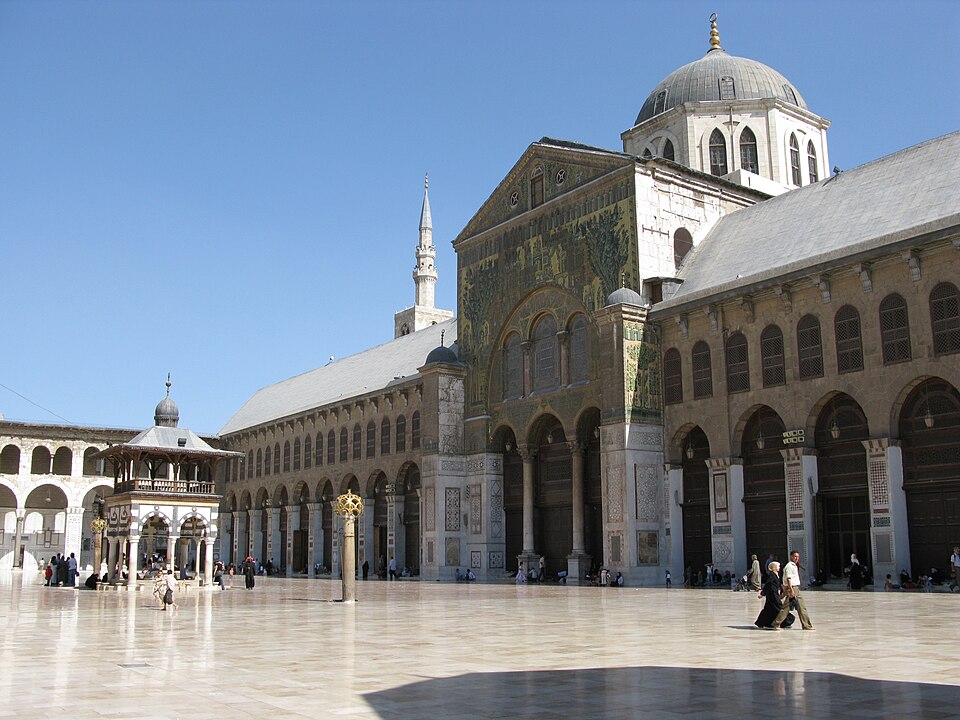
The great mosque with its minaret and courtyard.
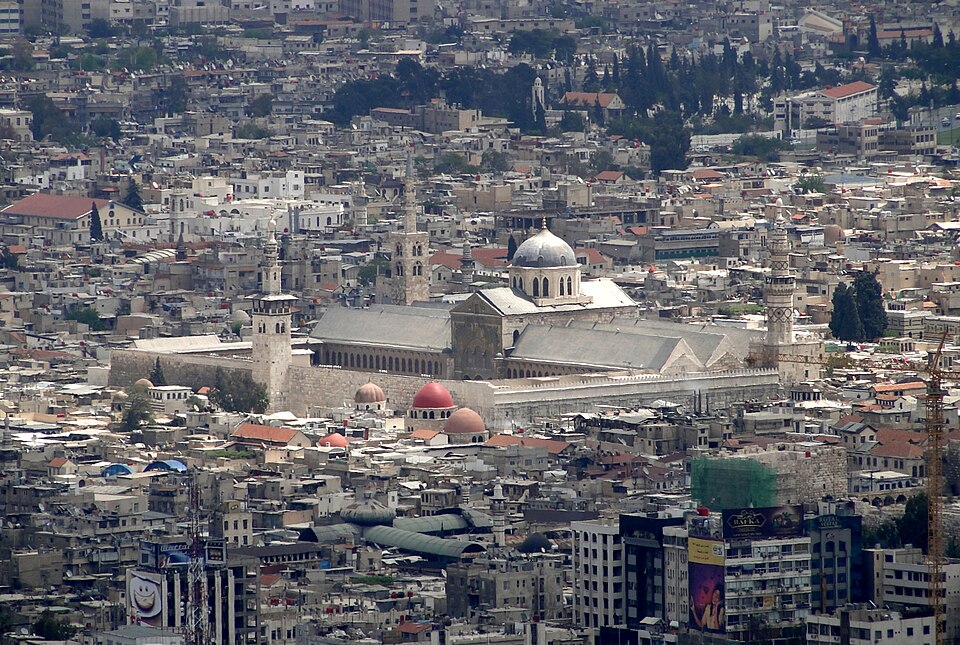
The Umayyad Mosque (Arabic: ٱلْجَامِع ٱلْأُمَوِي, romanized: al-Jāmiʿ al-Umawī), also known as the Great Mosque of Damascus (Arabic: جَامِع بَنِي أُمَيَّة ٱلْكَبِيْر, romanized: Jāmiʿ Banī Umayyah al-Kabīr), located in the old city of Damascus, the capital of Syria, is one of the largest and oldest mosques in the world. It is considered to be the oldest mosque still in use in its original form. It innovated and influenced nascent Islamic architecture by introducing a more organized and monumental design compared to earlier mosques. It enjoyed great prestige throughout its history and was regarded as a "wonder of the world" by many medieval Muslim writers. Although the original structure has been altered several times due to fire, war damage, and repairs, it is one of the few mosques to maintain the same form and architectural features of its 8th-century construction, as well as its Umayyad character. The plan of the mosque with its courtyard surrounded by riwaqs and a covered praying area is based on the original plan of the Prophet's Mosque in Medina, which was itself reconstructed and expanded under the Umayyads in 707 AD.
Further reading
Umayyad Mosque is one of the 3D puzzles in World Artifacts: turn a cloud of broken pieces until it lines up. For iPhone, iPad, Apple Vision Pro and Android.

