World Artifacts › Atlas › Thailand
Krathong
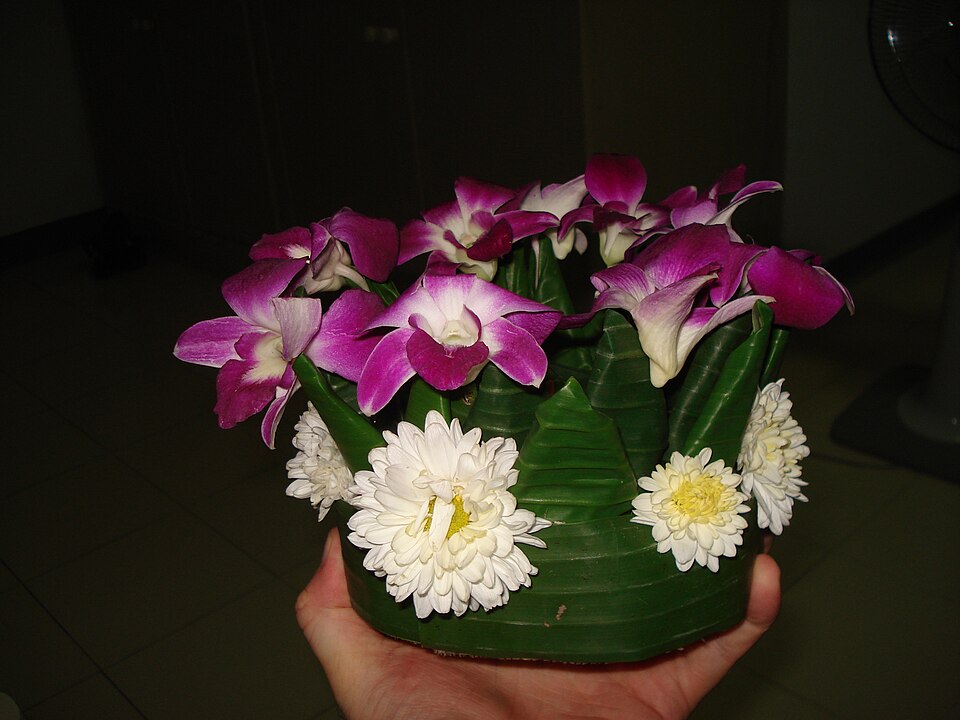
The float is made of a banana trunk slice and folded leaves, with a candle, incense and a coin, launched at the November full moon to carry away the year's bad luck. Styrofoam versions were banned when the rivers filled with them.
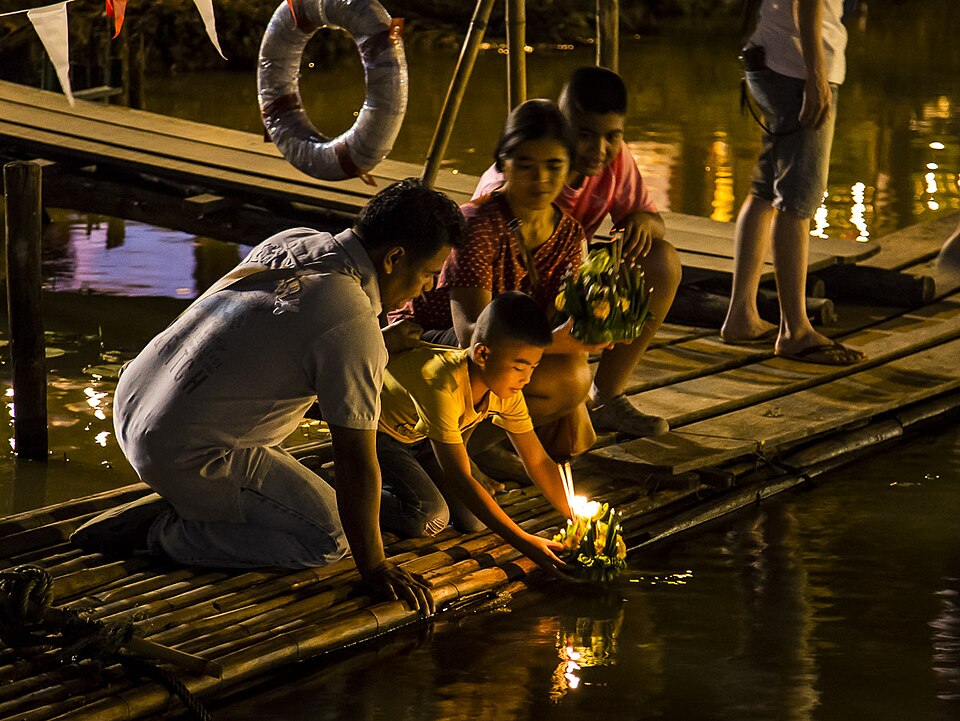
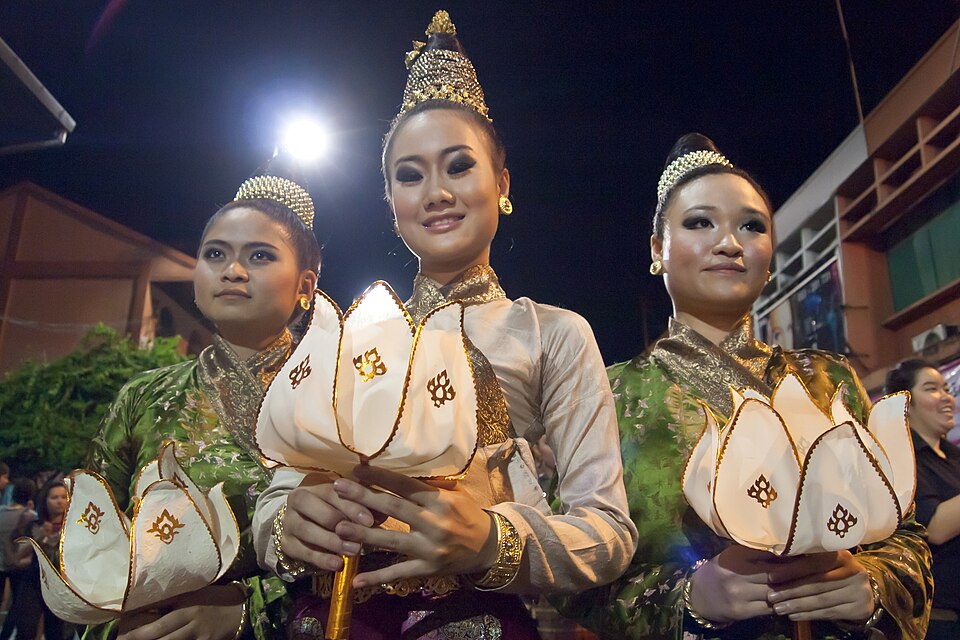
Loy Krathong (Thai: ลอยกระทง, RTGS: Loi Krathong, pronounced [lɔ̄ːj krā.tʰōŋ]) is a Thai festival celebrated annually throughout Thailand and in nearby countries with significant Southwestern Tai cultures (Laos, Shan, Mon, Tanintharyi, Kelantan, Kedah, Perlis and Xishuangbanna). The name could be translated as "to float ritual vessel or lamp," and comes from the tradition of making krathong or buoyant, decorated baskets, which are then floated on a river. Originally limited to Bangkok elites, Loy Krathong became an “invented tradition” in post-WWII Thailand in response to nationalism and to drive tourism. Many Thais use the krathong to thank the Goddess of Water and River, Goddess Khongkha (Thai: พระแม่คงคา) This festival along with other Hindu/brahmanical beliefs and practices trace back to India and were first practiced during the 11th/12th century Angkorian period of the Khmer Empire, pre-dating Sukhothai.
Loy Krathong takes place on the evening of the full moon of the 12th month in the traditional Thai lunar calendar, thus the exact date of the festival changes every year. In the Western calendar this usually falls in the month of November. In Chiang Mai, the festival lasts three days, and in 2024, the dates were 15-17 November.
Further reading
Krathong is one of the 3D puzzles in World Artifacts: turn a cloud of broken pieces until it lines up. For iPhone, iPad, Apple Vision Pro and Android.

