World Artifacts › Atlas › Thailand
Siamese Cat
Siamese kittens are born white. The enzyme that makes their dark pigment only works below body temperature, so the colour appears on the cool parts, the ears, face, paws and tail, as they grow.
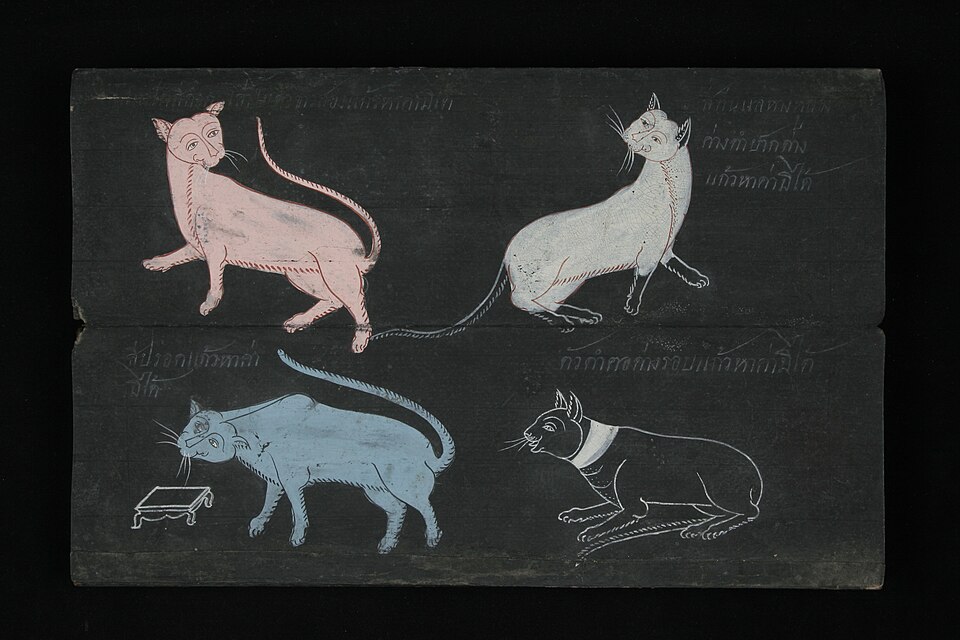
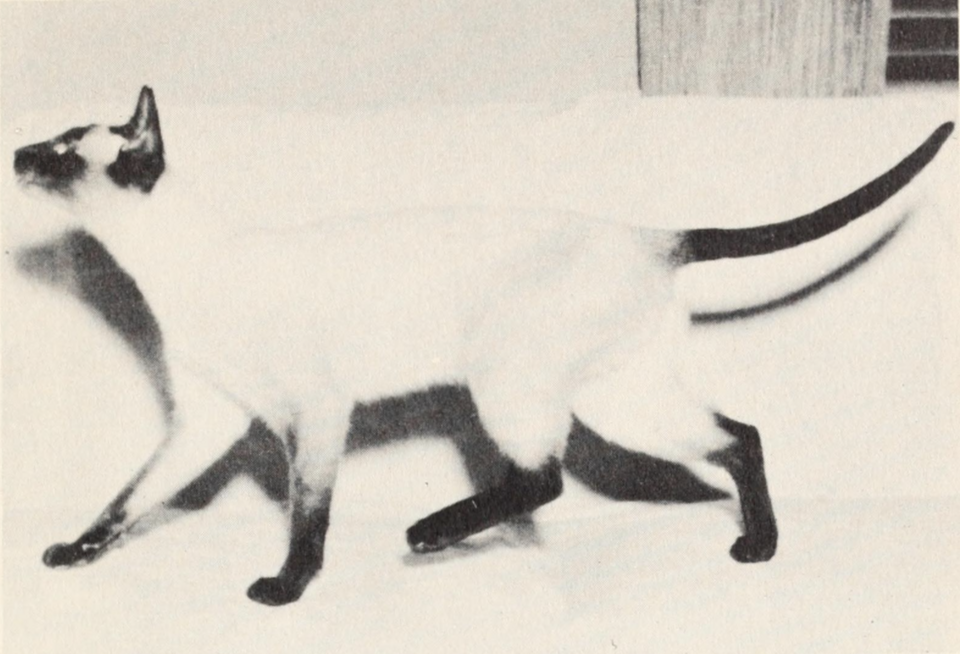
The Siamese cat (Thai: แมวไทย, Maeo Thai; แมวสยาม, Maeo Sayam; แมววิเชียรมาศ, Maeo Wichien Maat) is one of the first distinctly recognised breeds of domestic cat. It is selectively bred since the end of the 19th-century from the Wichianmat landrace, one of several varieties of cats native to Thailand (known as Siam before 1939), and is pedigreed in all major cat fancier and breeder organisations. Siamese cats have a distinctive colourpoint coat, resulting from a temperature-sensitive type of albinism. Distinct features like blue almond-shaped eyes, a triangular wedged head shape, large wide-set ears, an elongated, slender, and muscular body, and various colours of point colouration characterise the breed.
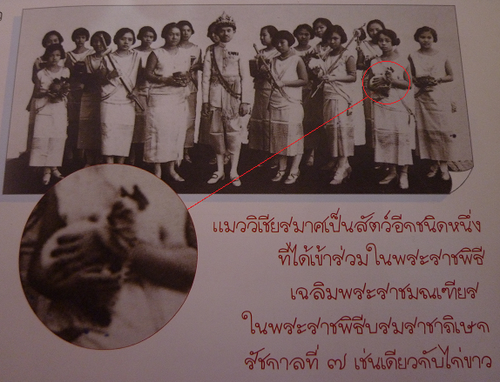
The breed was one of the most popular cat breeds in Europe and North America in the 19th century. Around the 1950s, the modern-style body with slender and angular features became the preferred type by Siamese enthusiasts. From the 1980s onwards, the traditional "old-style" (rounder-built) cats started to officially split off from the (modern-style) Siamese breed and were re-established by multiple registries as the separate Thai cat breed. The terms "Siamese" or "Thai" are used for cats from these specific breeds, which are by definition all purebred cats with a known and formally registered ancestry, also known as the cat's pedigree or "paperwork".
Further reading
Siamese Cat is one of the 3D puzzles in World Artifacts: turn a cloud of broken pieces until it lines up. For iPhone, iPad, Apple Vision Pro and Android.

