World Artifacts › Atlas › Thailand
Thai Silk
Thai silk was a dying cottage industry until an American, Jim Thompson, rebuilt it into an export business after the war. In 1967 he went for a walk in the Malaysian highlands and was never seen again.
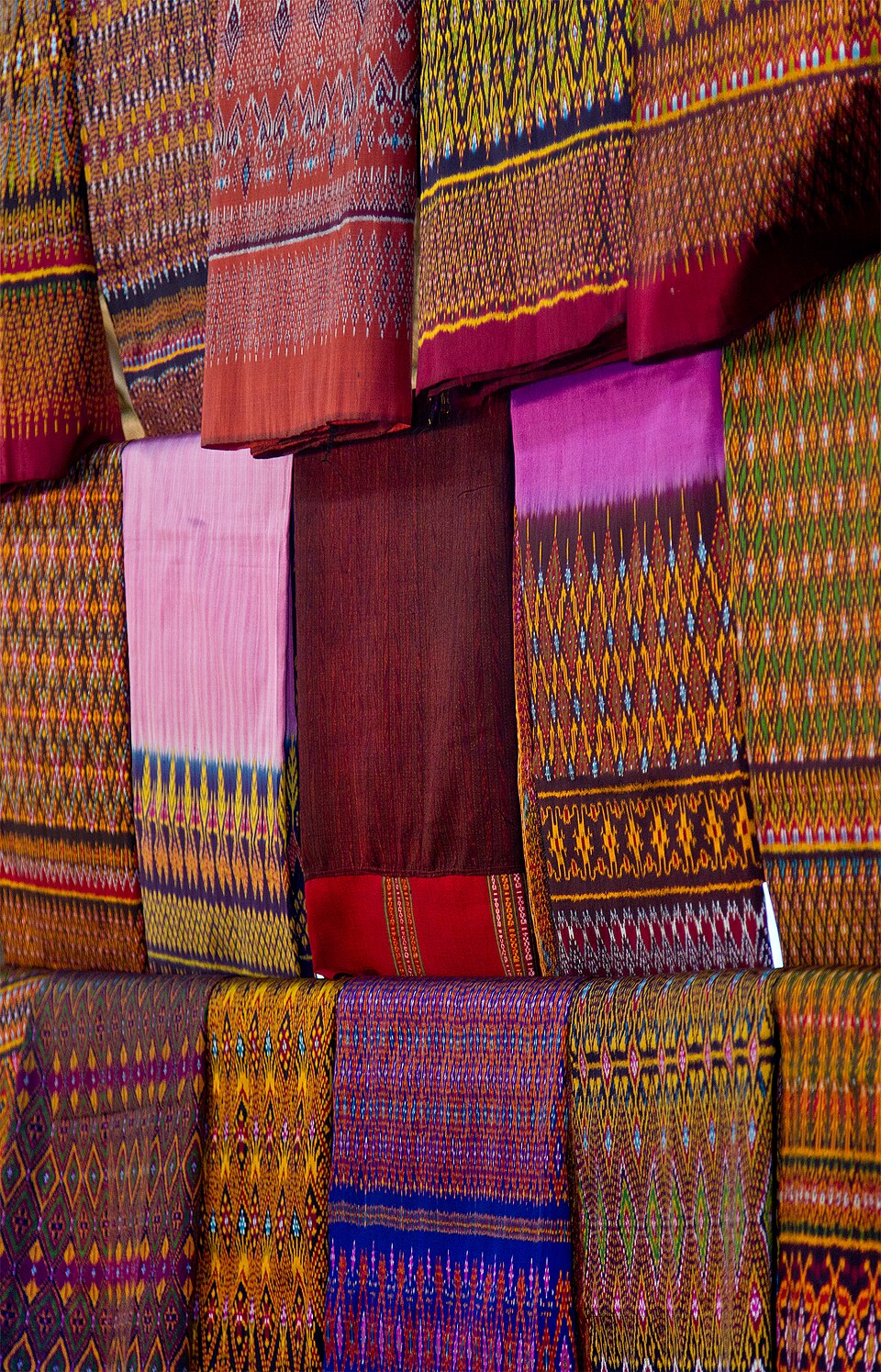
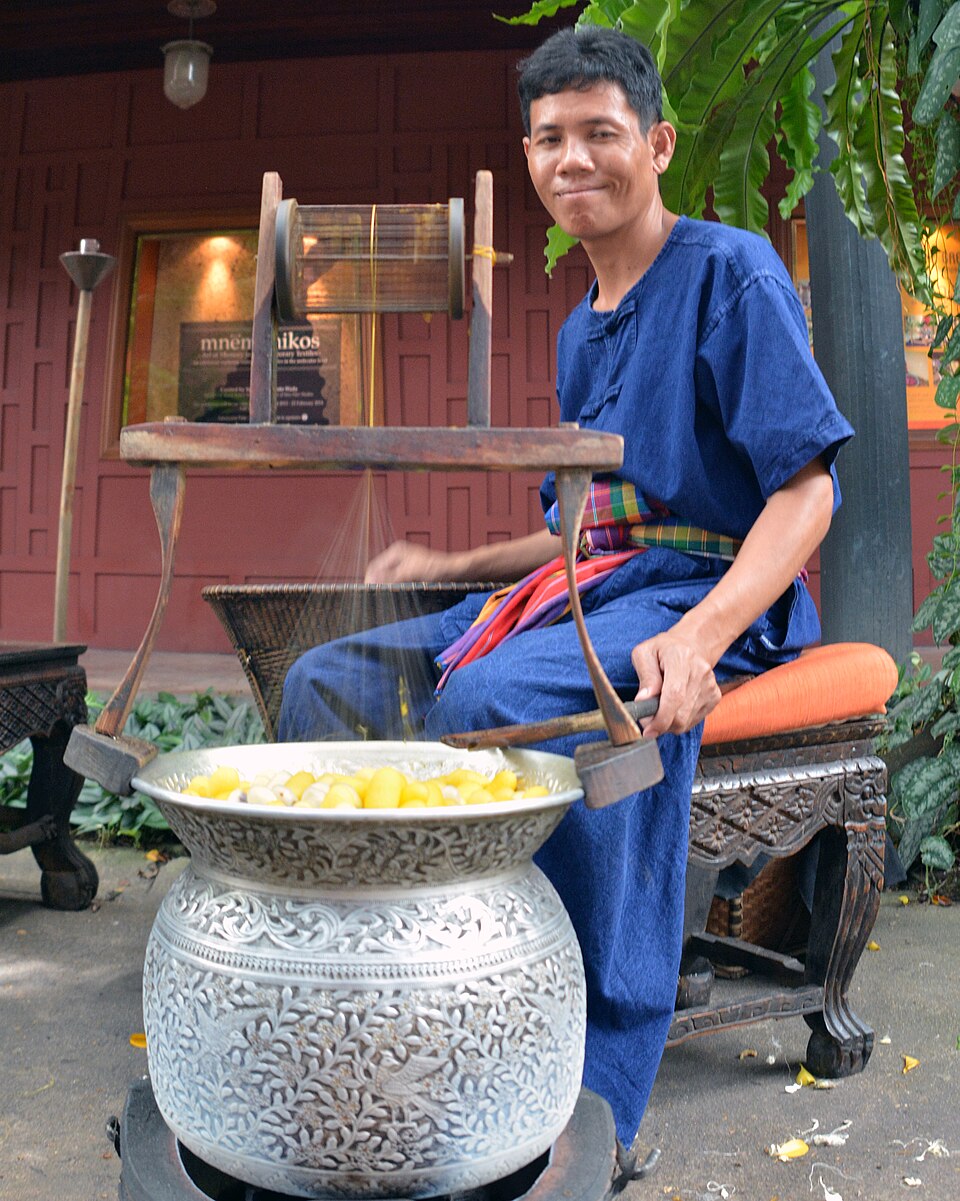
Thai silk (Thai: ผ้าไหมไทย, RTGS: pha mai thai, pronounced [pʰâː mǎj tʰāj]) is produced from the cocoons of Thai silkworms. Thailand's silkworm farmers cultivate both types of the domesticated silkworms that produce commercial silk: Samia ricini, commonly known as the eri silkworm, which produces matte eri silk, and the Bombyx mori, producer of the better known, glossy mulberry silk. The latter is by far the larger silk producer of the two.
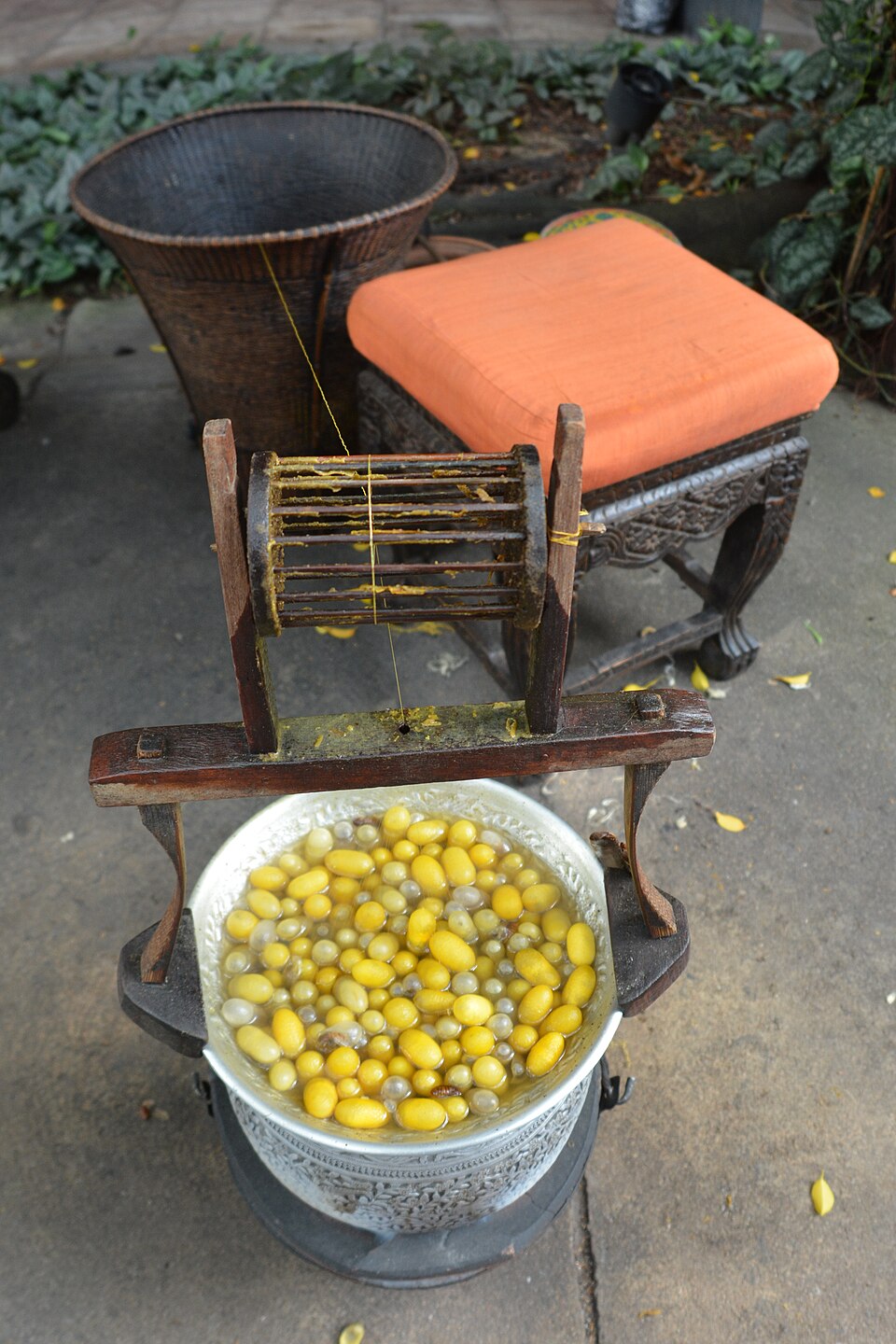
In Thailand, the Center for Excellence in Silk at Kasetsart University's Kamphaeng Saen campus plays a leading role in sericulture research as well as providing silkworm eggs and know-how to Thai farmers.
Further reading
Thai Silk is one of the 3D puzzles in World Artifacts: turn a cloud of broken pieces until it lines up. For iPhone, iPad, Apple Vision Pro and Android.

