World Artifacts › Atlas › Tunisia
Punic Tanit Symbol
The triangle-and-circle symbol.
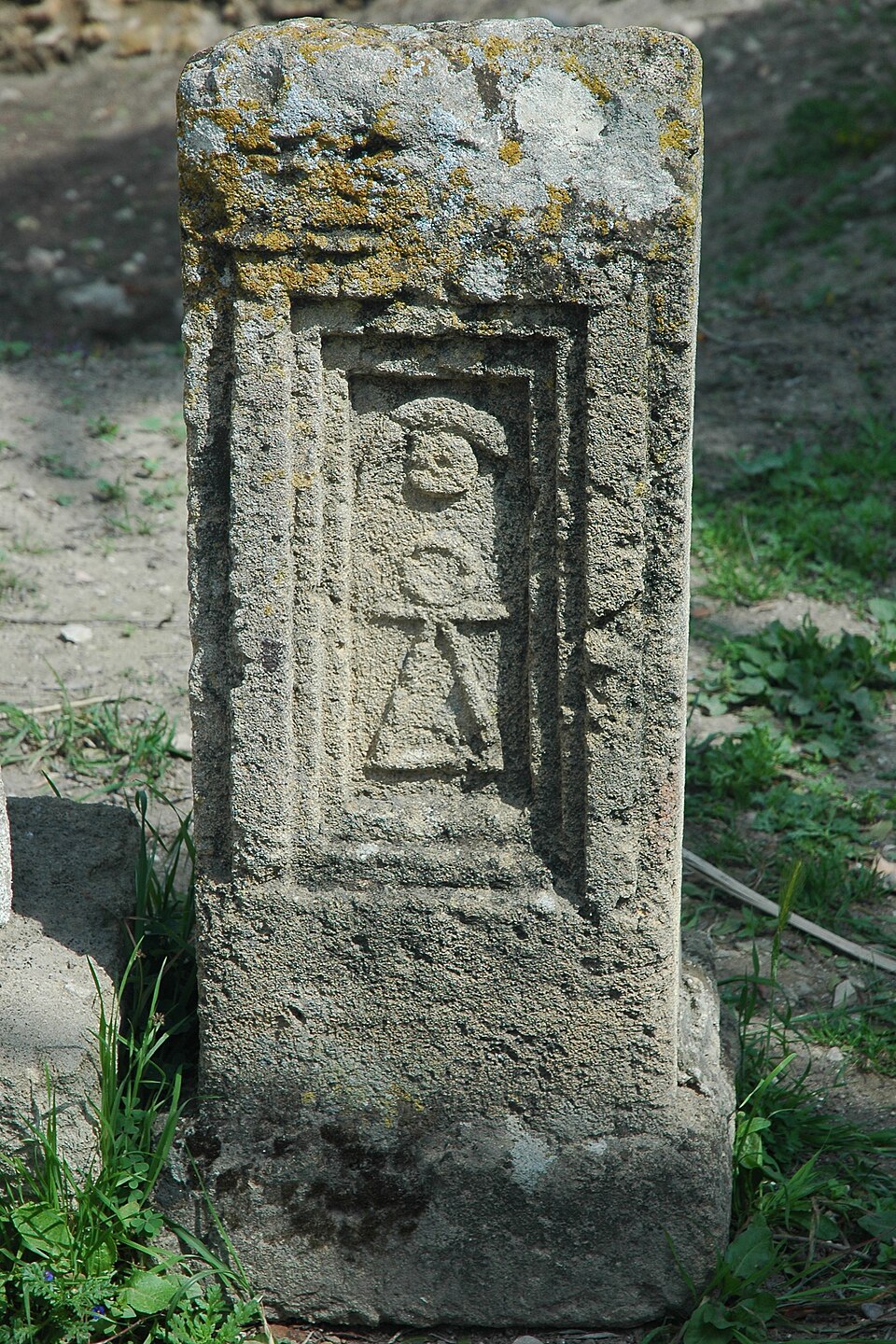
The sign of Tanit or sign of Tinnit is an anthropomorph symbol of the goddess Tanit, present on many archaeological remains concentrated mainly in the western mediterranean in the Carthaginian civilization, Numidia, Sicily and southern Spain.
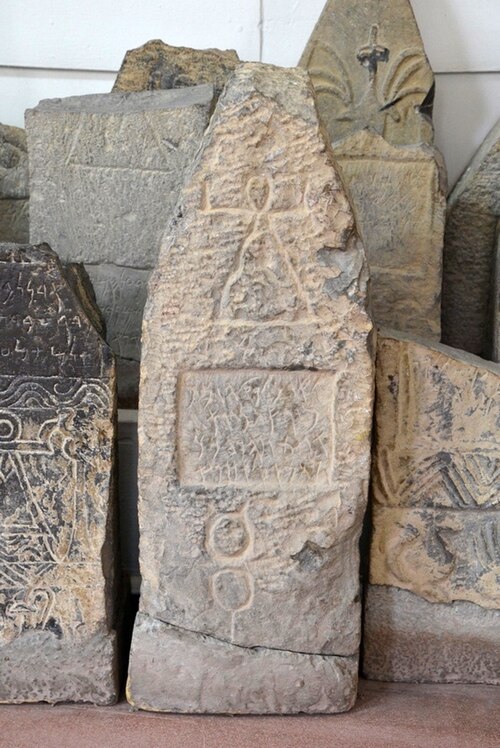
The symbol has many variants, but the basic form consists of a disc on top of a triangle, separated by a horizontal line, like a schematic image of a person.
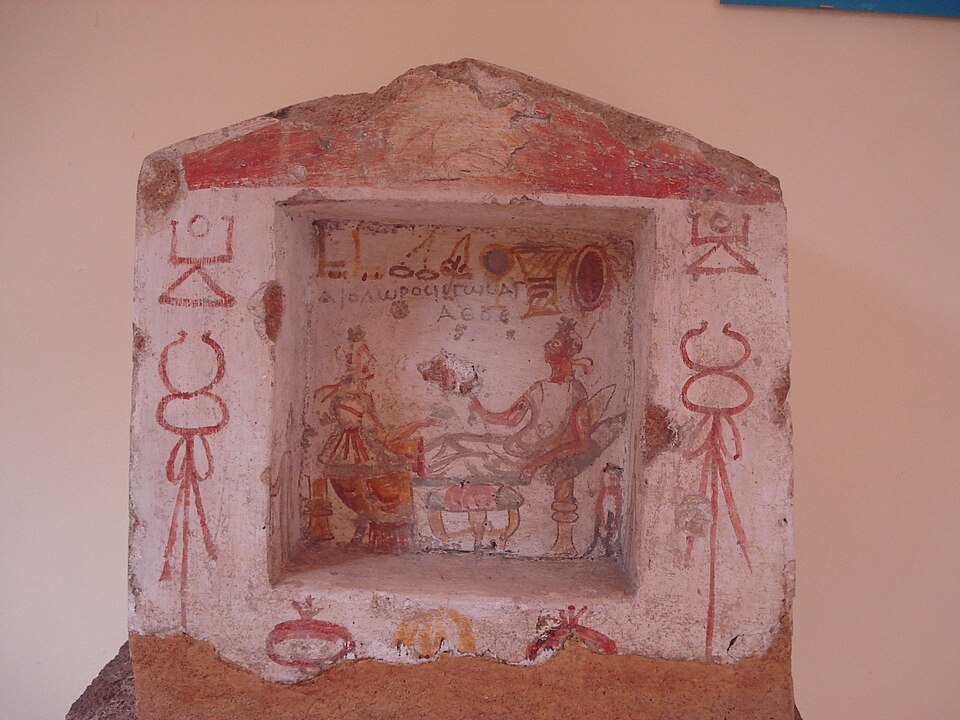
The first report about the representations of the sign was in the beginning of the 19th century, on stele unearthed on the site of Carthage. Archaeological excavations have subsequently uncovered representations on other supports, such as mosaics or even on ceramics.
The excavations of tophet of Carthage, Sousse and Motya have highlighted the particularly important diffusion of the symbol in the western Mediterranean Basin, although the lack of discoveries on primitive Phoenician land may only be due to continued occupation of sites, making searches more difficult. Stele containing the sign of Tannit were uncovered in the hundreds in the site of El-Hofra in Cirta (Constantine, Algeria) and are showcased in the Louvre Museum. A single coin with the sign and a legend ΦΑΝΗΒΑΛΟΣ phanebalos, is theorized to be the Greek form of the Phoenician title of the goddess, i.e. 𐤕𐤍𐤕 𐤐𐤍 𐤁𐤏𐤋 tnt pn bʿl, "Tanit the face of Baal (Hammon)", was found in Ashkelon presumably reaching the site through a carthagenian trade route to the eastern mediterranean.
Further reading
- Carthage · Serge Lancel (1992)A history of Carthage covering its civilization and Punic antiquities.Find a copy: AbeBooks · Amazon · WorldCat
- Phoenicians (Peoples of the Past) · Glenn Markoe (2000)A study of the Phoenicians, the people from whom Punic culture came.Find a copy: AbeBooks · Amazon · WorldCat
Punic Tanit Symbol is one of the 3D puzzles in World Artifacts: turn a cloud of broken pieces until it lines up. For iPhone, iPad, Apple Vision Pro and Android.

