World Artifacts › Atlas › Turkey
Blue Mosque
Six minarets caused offence when it was built, because the mosque at Mecca had six and no other should match it. The sultan's answer was to pay for a seventh minaret at Mecca.
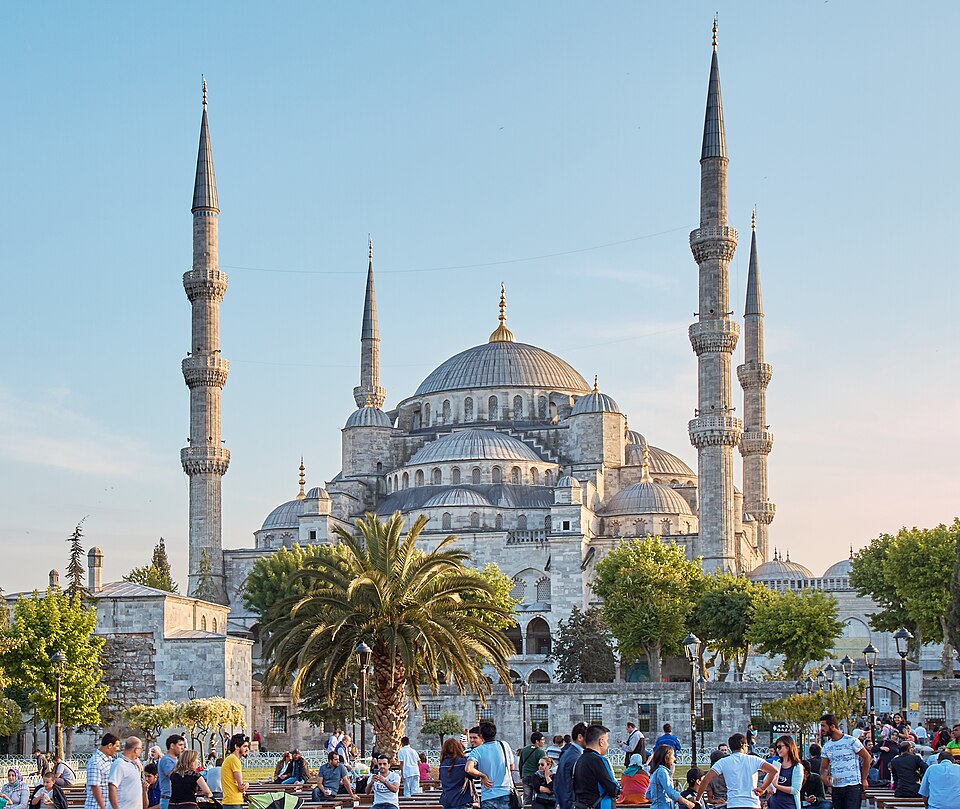
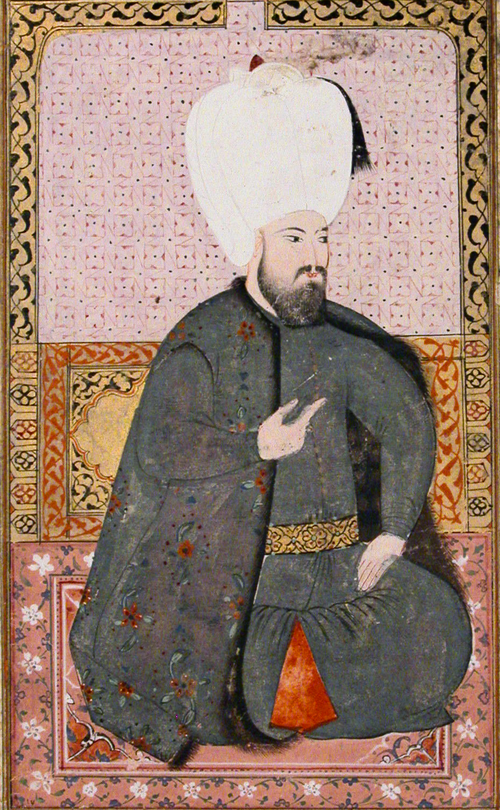
The Sultan Ahmed Mosque (Turkish: Sultanahmet Camii), popularly known as the Blue Mosque, is an Ottoman-era historical imperial mosque located in Istanbul, Turkey. It was constructed between 1609 and 1617 during the rule of Ahmed I. It attracts a large number of tourists and is one of the most iconic and popular monuments of Ottoman architecture.
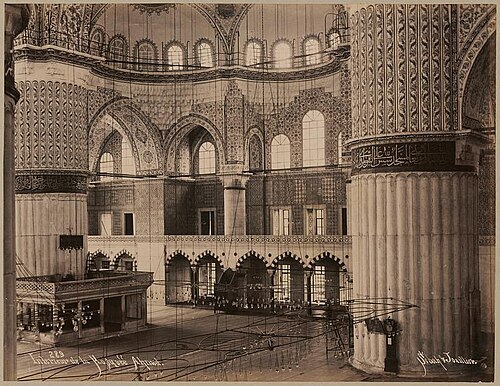
The mosque has a classical Ottoman layout with a central dome surrounded by four semi-domes over the prayer hall. It is fronted by a large courtyard and flanked by six minarets. On the inside, it is decorated with thousands of Iznik tiles and painted floral motifs in predominantly blue colours, which give the mosque its popular name. The mosque's külliye (religious complex) includes Ahmed's tomb, a madrasa, and several other buildings in various states of preservation.
The mosque was built next to the former Hippodrome and stands across from the Hagia Sophia, another popular tourist site. The Blue Mosque was included in the UNESCO World Heritage Site list in 1985 under the name of "Historic Areas of Istanbul".
Further reading
- A history of Ottoman architecture · Godfrey Goodwin (1971)A history of Ottoman architecture in Turkey, covering the tradition the mosque belongs to.Find a copy: AbeBooks · Amazon · WorldCat
- Ottoman architecture · Doğan Kuban (2005)A study of Ottoman architecture and its historic and Islamic buildings.Find a copy: AbeBooks · Amazon · WorldCat
Blue Mosque is one of the 3D puzzles in World Artifacts: turn a cloud of broken pieces until it lines up. For iPhone, iPad, Apple Vision Pro and Android.

