World Artifacts › Atlas › Turkey
Ottoman Galley
The Ottoman war galley was rowed rather than sailed, because in the Mediterranean a fleet needs to move in a flat calm. At Lepanto in 1571 the last great galley battle in European history was fought, and the Ottoman fleet was rebuilt within a year.
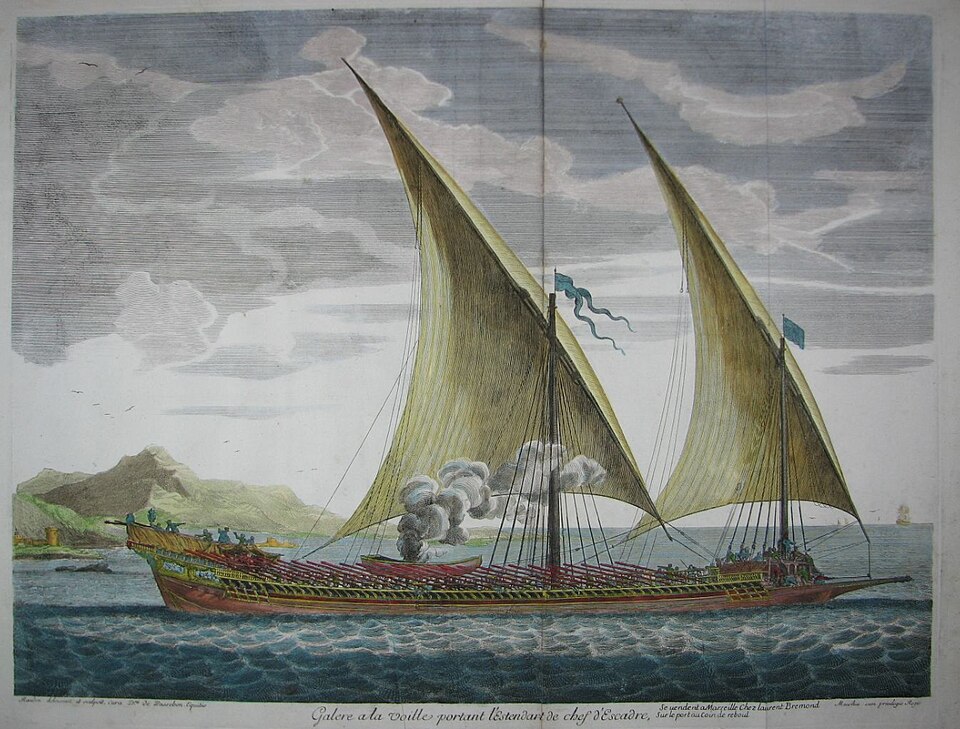
A galley is a type of ship optimised for propulsion by oars. Galleys were historically used for warfare, trade, and piracy mostly in the seas surrounding Europe. It developed in the Mediterranean world during antiquity and continued to exist in various forms until the early 19th century. It typically had a long, slender hull, shallow draft, and often a low freeboard. Most types of galleys also had sails that could be used in favourable winds, but they relied primarily on oars to move independently of winds and currents or in battle. The term "galley" originates from the Ancient Greek word "galea" which was used to describe a narrow vessel with resemblance to the shape of a dogfish. It is believed the English form of the term came into use around 1300. It has occasionally been used for unrelated vessels with similar military functions as the galley but which were not Mediterranean in origin, such as medieval Scandinavian longships, 16th-century Acehnese ghalis and 18th-century North American gunboats.
Further reading
- Gunpowder and galleys · John Francis Guilmartin (1974)Covers galley warfare and naval history in the Mediterranean in the age of gunpowder.Find a copy: AbeBooks · Amazon · WorldCat
- Victory of the West · Niccolo Capponi (2006)A history of the Battle of Lepanto in 1571.Find a copy: AbeBooks · Amazon · WorldCat
Ottoman Galley is one of the 3D puzzles in World Artifacts: turn a cloud of broken pieces until it lines up. For iPhone, iPad, Apple Vision Pro and Android.

