World Artifacts › Atlas › Taiwan
Scooter
The scooter in traffic.
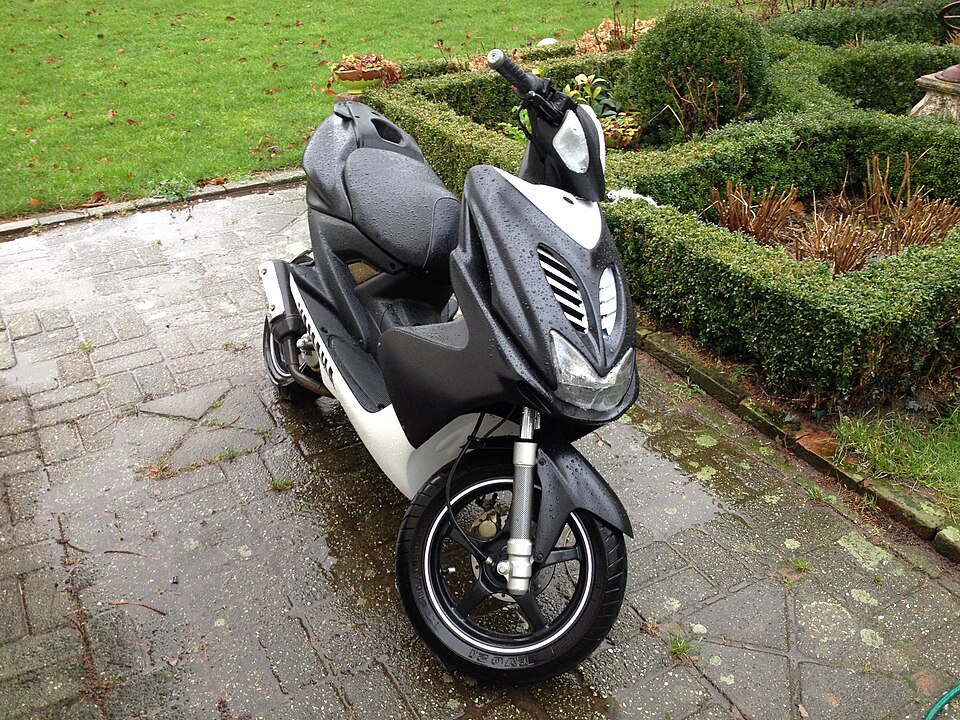
A scooter or motor scooter is a motorcycle with an underbone or step-through frame, a seat, and a platform for the rider's feet.
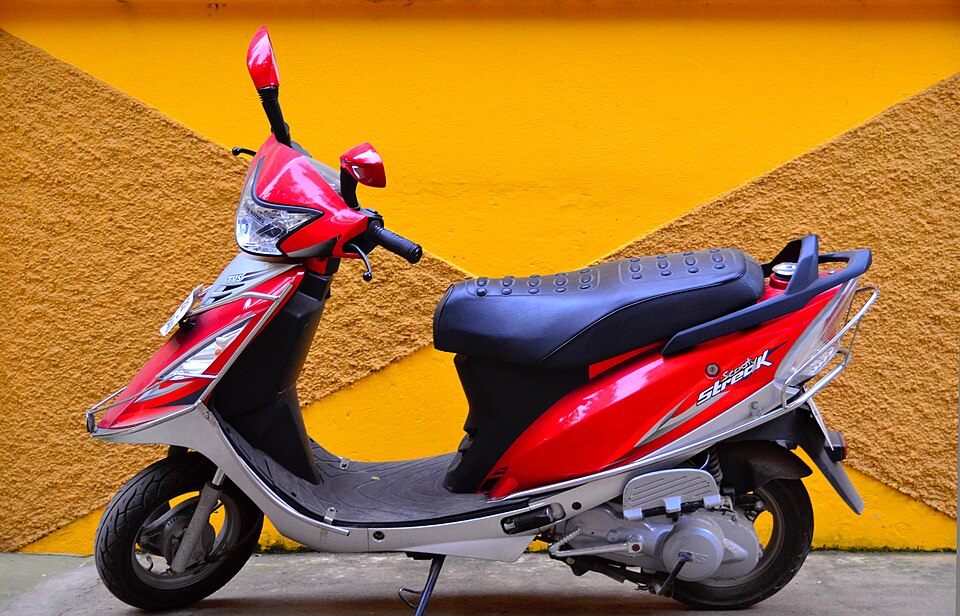
Many scooters typically have a design that focuses on an easy method of operation and fuel economy. Hence common (but non-defining) traits of scooters can include: bodywork (so the mechanicals are not exposed like a conventional motorcycle), motors combined with the suspension or wheel (rather than attached to the frame like a conventional motorcycle), leg shields, an alternative to a chain drive, smaller wheels than a conventional motorcycle, and a transmission that shifts without the rider having to operate a clutch.
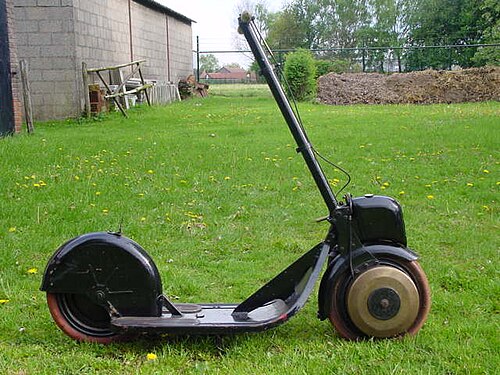
Elements of scooter design were present in some of the earliest motorcycles, and motor scooters have been made since at least 1914. More recently, scooters have evolved to include scooters exceeding 250cc classified as Maxi-scooters.
The global popularity of motor scooters dates from the post-World War II introductions of the Vespa and Lambretta models in Italy. These scooters were intended to provide economical personal transportation (engines from 50 to 150 cc or 3.1 to 9.2 cu in). The original layout is still widely used in this application. Maxi-scooters, with larger engines from 200 to 850 cc (12 to 52 cu in), have been developed for Western markets.
Further reading
Scooter is one of the 3D puzzles in World Artifacts: turn a cloud of broken pieces until it lines up. For iPhone, iPad, Apple Vision Pro and Android.

