World Artifacts › Atlas › Tanzania
Kilimanjaro
Kilimanjaro is a single volcano rather than a range, and it is high enough to carry glaciers three degrees from the equator. Those ice fields have lost the great majority of their area in a century, and the summit can be reached by walking, which is why so many unprepared people try.
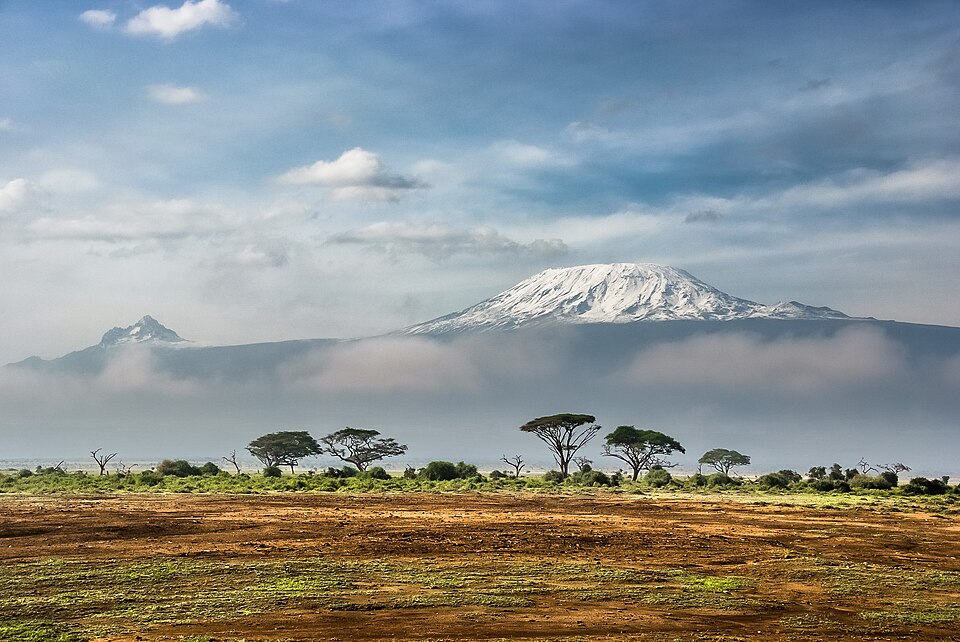
Mount Kilimanjaro () is a large dormant stratovolcano in Tanzania. It is the highest mountain in Africa and the highest free-standing mountain above sea level in the world, at 5,895 m (19,341 ft) above sea level and 4,900 m (16,100 ft) above its plateau base. It is also the highest volcano in the Eastern Hemisphere and the fourth most prominent peak on Earth.
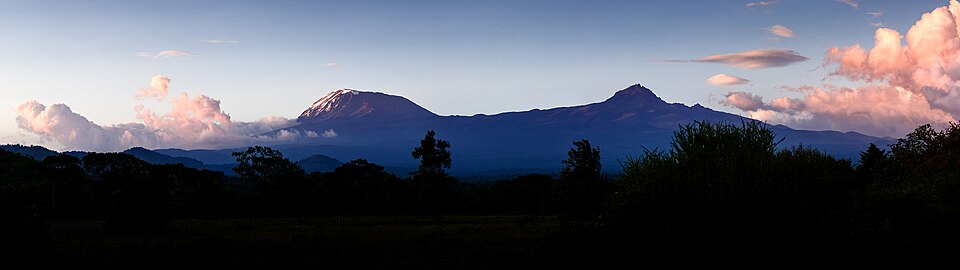
Kilimanjaro's southern and eastern slopes served as the home of the Chagga Kingdoms until their abolition in 1963 by Julius Nyerere. The origin and meaning of the name Kilimanjaro is unknown, but may mean "mountain of greatness" or "unclimbable". Although it is described in classical sources, German missionary Johannes Rebmann is credited as the first European to report the mountain's existence, in 1848. After several European attempts, Hans Meyer reached Kilimanjaro's highest summit in 1889.
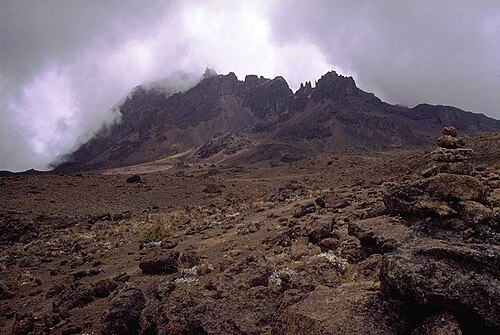
The mountain was incorporated into Kilimanjaro National Park in 1973. As one of the Seven Summits, Kilimanjaro is a major hiking and climbing destination. There are seven established routes to Uhuru Peak, the mountain's highest point. Although not as technically challenging as similar mountains, the prominence of Kilimanjaro poses a serious risk of altitude sickness.
Further reading
- The Conservation of Mount Kilimanjaro (The IUCN conservation library) · William Dubois Newmark (1991)A conservation study of Mount Kilimanjaro, covering its ecosystem management and national parks.Find a copy: AbeBooks · Amazon · WorldCat
- Kilimanjaro and Its People · Charles Dundas (2012)A book on Kilimanjaro and the Chaga people who live on the mountain.Find a copy: AbeBooks · Amazon · WorldCat
Kilimanjaro is one of the 3D puzzles in World Artifacts: turn a cloud of broken pieces until it lines up. For iPhone, iPad, Apple Vision Pro and Android.

