World Artifacts › Atlas › Tanzania
Tanzanite Gem
Tanzanite has been found in one place on earth, a few square kilometres near Kilimanjaro, and was identified only in 1967. Most of it comes out of the ground brown and turns blue when heated, which was discovered by accident in a grass fire.
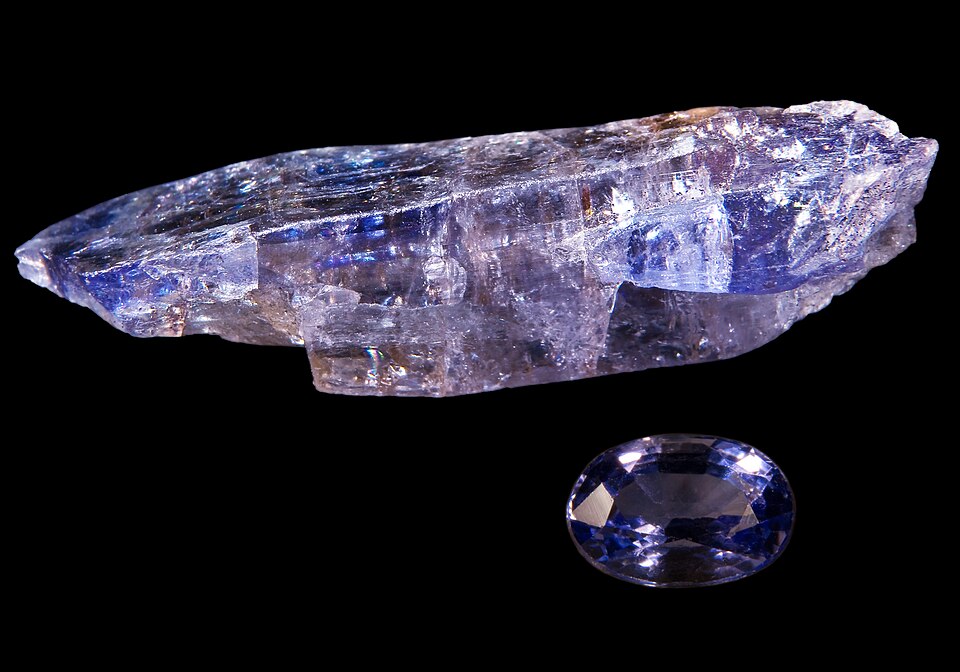
Tanzanite is the blue and violet variety of the mineral zoisite (a calcium aluminium hydroxyl sorosilicate). The color is caused by small amounts of vanadium. Tanzanite belongs to the epidote mineral group. Tanzanite is only found in Simanjiro District of Manyara Region in Tanzania, in a very small mining area approximately 7 km (4.3 mi) long and 2 km (1.2 mi) wide near the Mererani Hills.
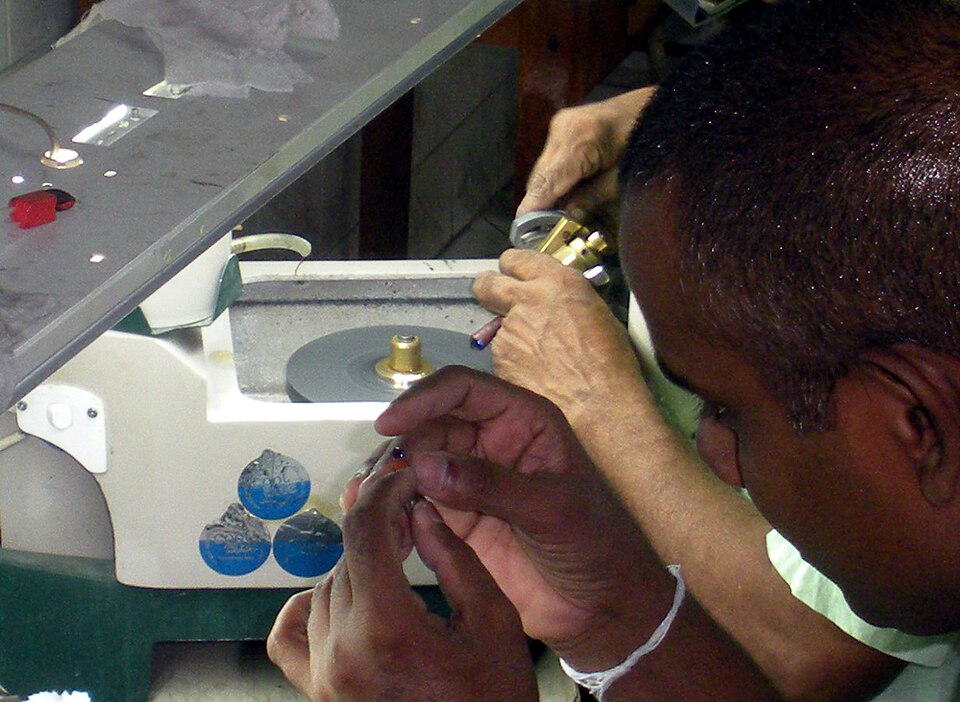
Tanzanite is noted for its remarkably strong trichroism, appearing alternately blue, violet and burgundy depending on crystal orientation. Tanzanite can also appear differently when viewed under different lighting conditions. The blues appear more evident when subjected to fluorescent light and the violet hues can be seen readily when viewed under incandescent illumination. In its rough state tanzanite is coloured a reddish brown to clear, and it requires heat treatment to remove the brownish "veil" and bring out the blue violet of the stone.
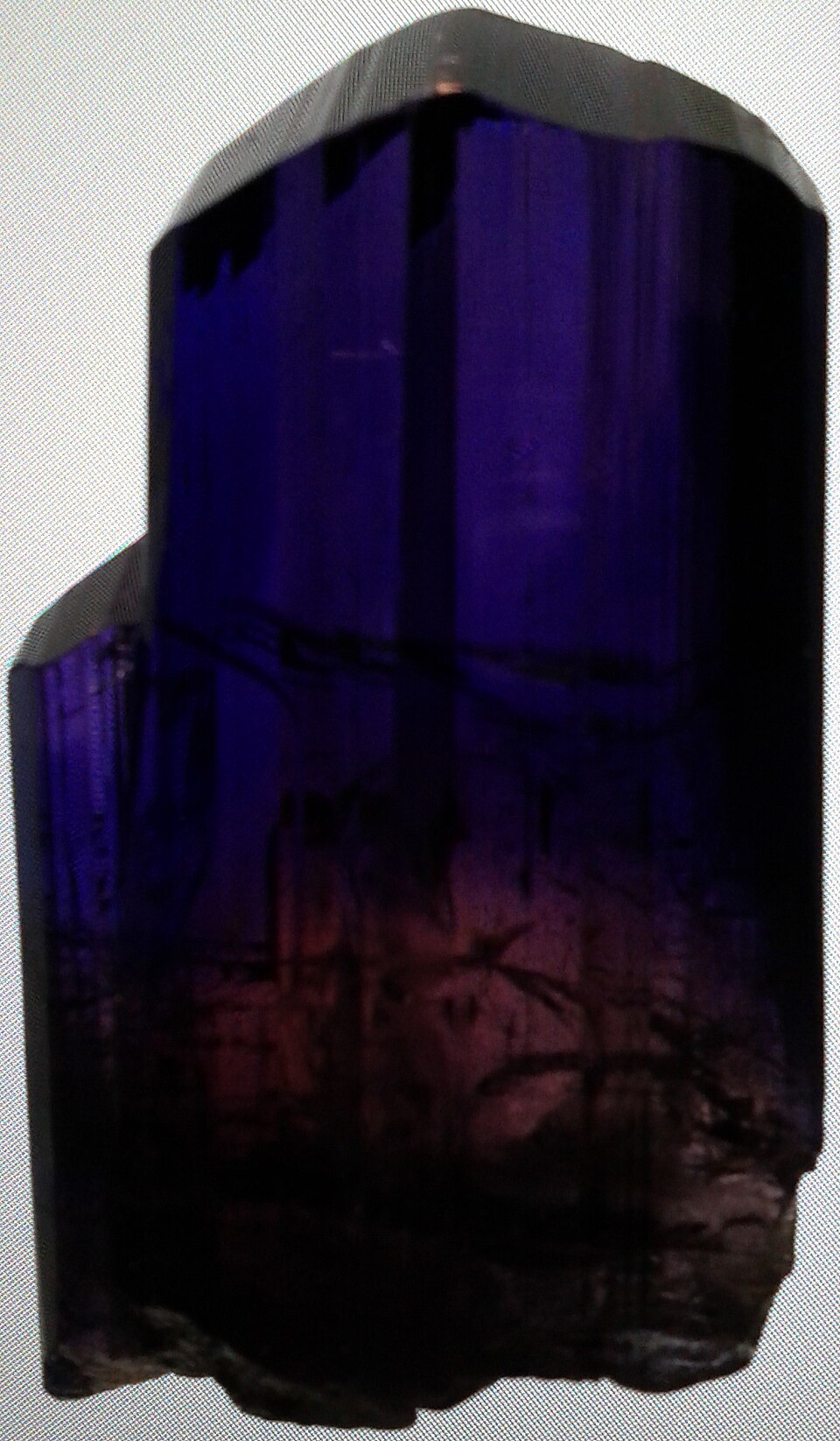
The gemstone was given the name "tanzanite" by Tiffany & Co. after Tanzania, the country in which it was discovered. The scientific name of "blue-violet zoisite" was not thought to be sufficiently consumer friendly by Tiffany's marketing department, who introduced it to the market in 1968. In 2002, the American Gem Trade Association chose tanzanite as a December birthstone, the first change to their birthstone list since 1912.
Further reading
Tanzanite Gem is one of the 3D puzzles in World Artifacts: turn a cloud of broken pieces until it lines up. For iPhone, iPad, Apple Vision Pro and Android.

