World Artifacts › Atlas › Tanzania
Tingatinga Painting
Tingatinga painting began in the 1960s with one man using leftover bicycle enamel on squares of hardboard, because those were the materials he could get. He was shot by police in 1972 in a case of mistaken identity, and his students turned the style into an industry.
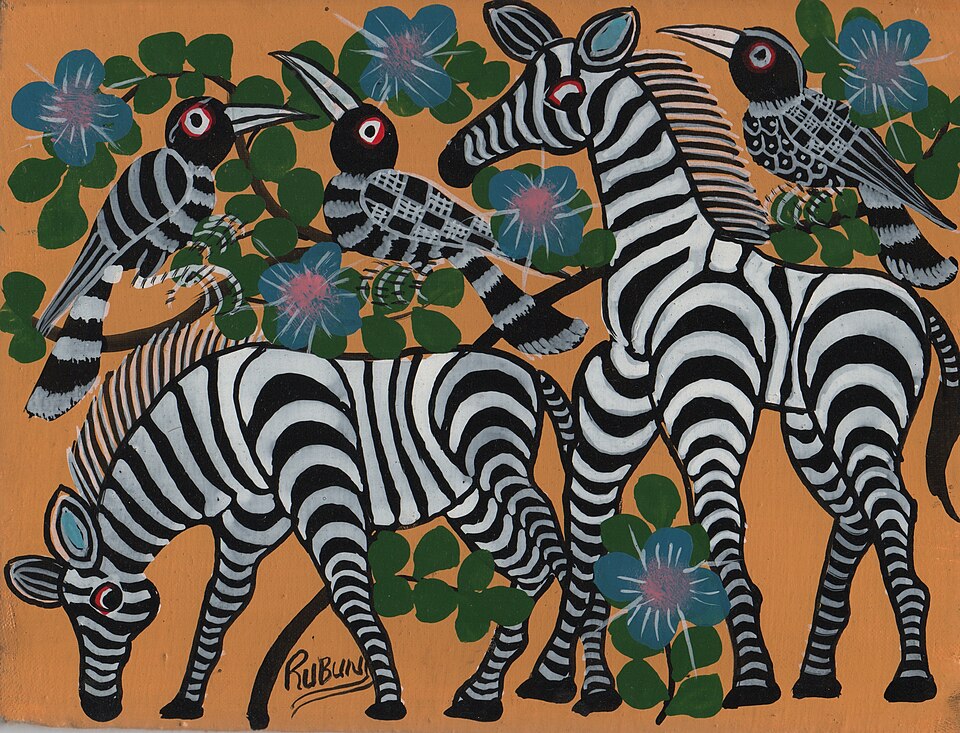
Tingatinga (also spelled Tinga-tinga or Tinga Tinga) is a painting style from East Africa. Tingatinga is one of the most widely represented forms of tourist-oriented painting in Tanzania, Kenya, and neighbouring countries. The genre is named after its founder, Tanzanian painter Edward Tingatinga, whose work also inspired kids-animation tales, namely Tinga Tinga Tales.
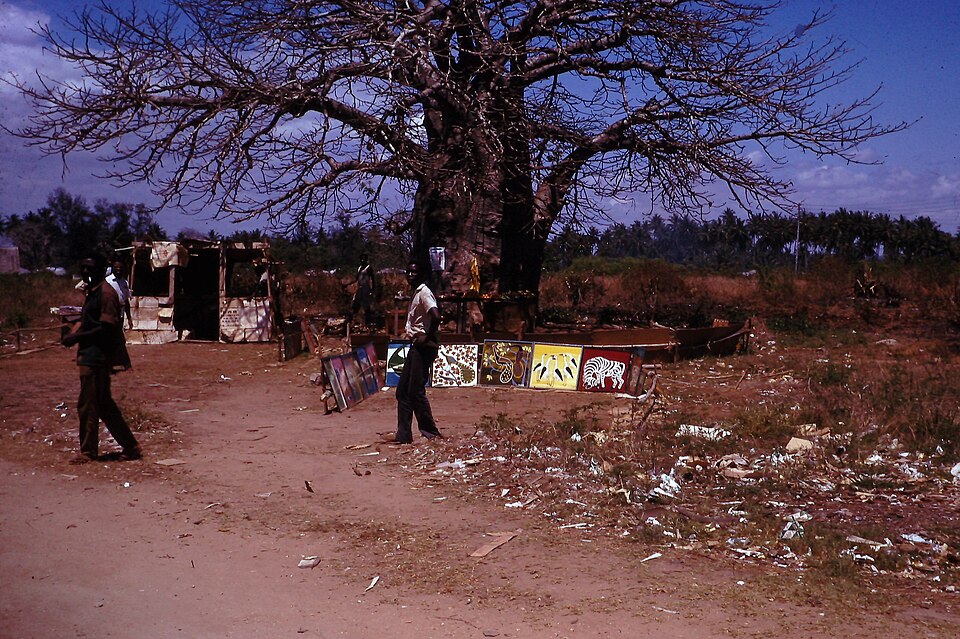
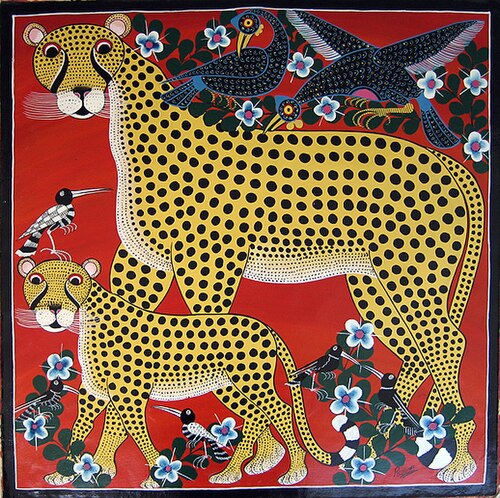
Tingatinga painting is traditionally made on masonite, using several layers of bicycle paint, which makes for brilliant and highly saturated colours. Many elements of the style are related to the requirements of the tourist-oriented market; for example, the paintings are usually small so they can be easily transported, and subjects are intended to appeal to Western buyers (e.g. the Big Five and other wild animals). In this sense, Tingatinga paintings have been considered a form of "airport painting". The images can be described as both naïve and caricatural; humour, and sarcasm are often explicit.
Tingatinga Painting is one of the 3D puzzles in World Artifacts: turn a cloud of broken pieces until it lines up. For iPhone, iPad, Apple Vision Pro and Android.

