World Artifacts › Atlas › Tanzania
Ugali
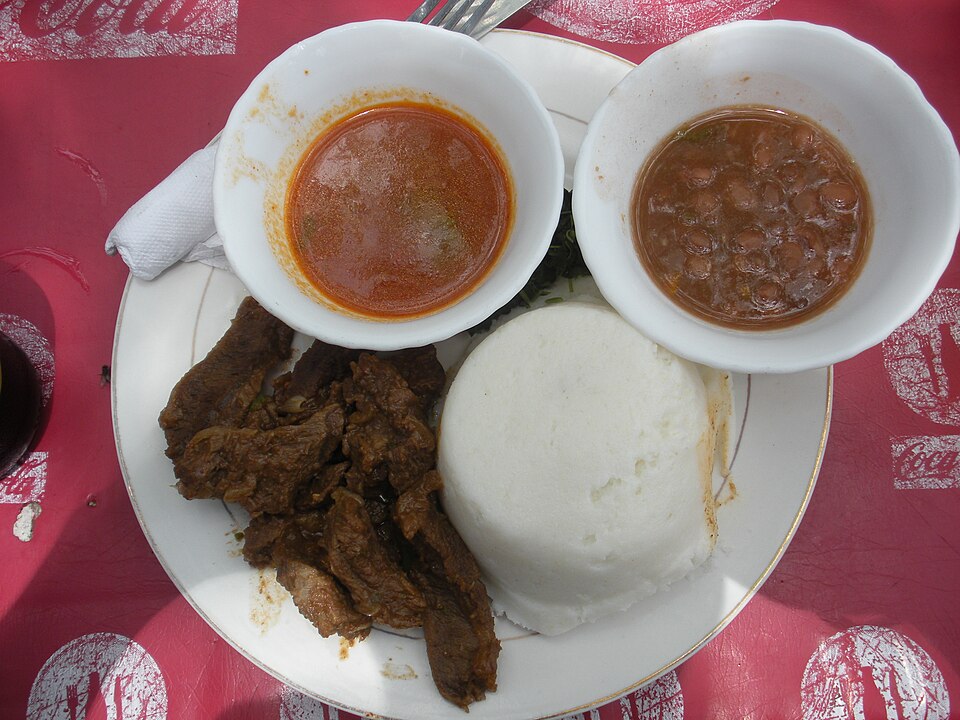
Ugali is stiff maize porridge, eaten by pinching off a lump with the right hand, rolling it and pressing a dent in it to scoop the stew. Maize arrived from the Americas and displaced the sorghum and millet that were grown here before.
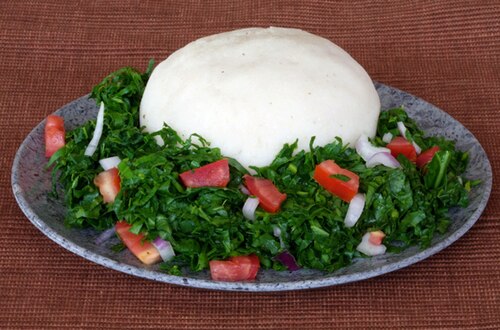
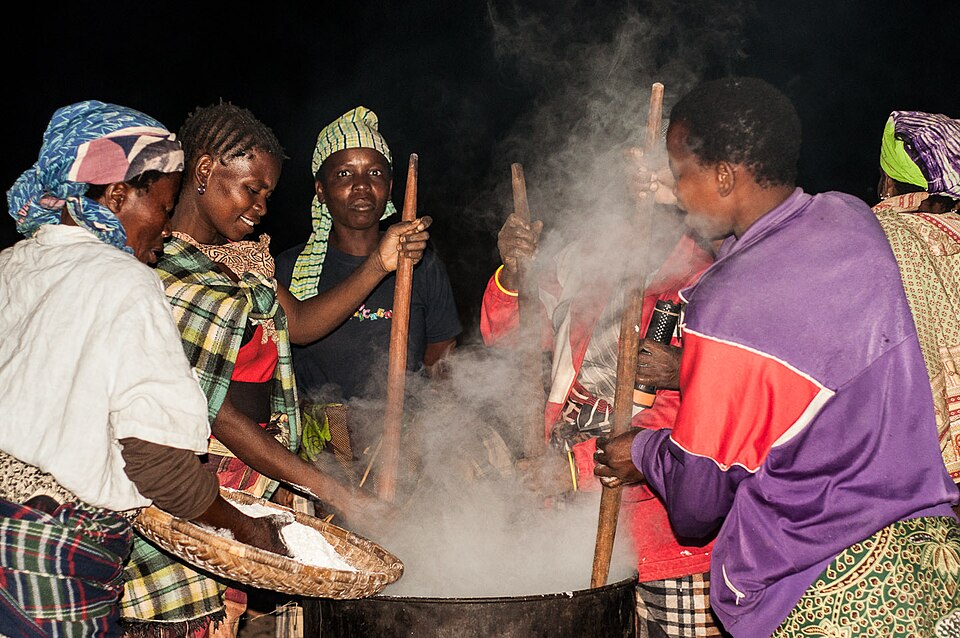
Ugali, also known as posho, nsima, papa, pap, bogobe, sadza, isitshwala, akume, amawe, ewokple, akple, and other names, is a type of corn meal made from maize or corn or mahindi flour in several African countries: Kenya, Uganda, South Sudan, Tanzania, Zimbabwe, Zambia, Lesotho, Eswatini, Angola, Mozambique, Namibia, Democratic Republic of the Congo, Rwanda, Malawi, Botswana and South Africa, and in West Africa by the Ewes of Togo, Ghana, Benin, Nigeria and Ivory Coast. It is cooked in boiling water or milk until it reaches a stiff or firm dough-like consistency. In 2017, the dish was added to the UNESCO Representative List of the Intangible Cultural Heritage of Humanity, one of a few foods on the list.
Further reading
Ugali is one of the 3D puzzles in World Artifacts: turn a cloud of broken pieces until it lines up. For iPhone, iPad, Apple Vision Pro and Android.

