World Artifacts › Atlas › Ukraine
Cossack Mace (Bulava)
The gilded ceremonial mace.
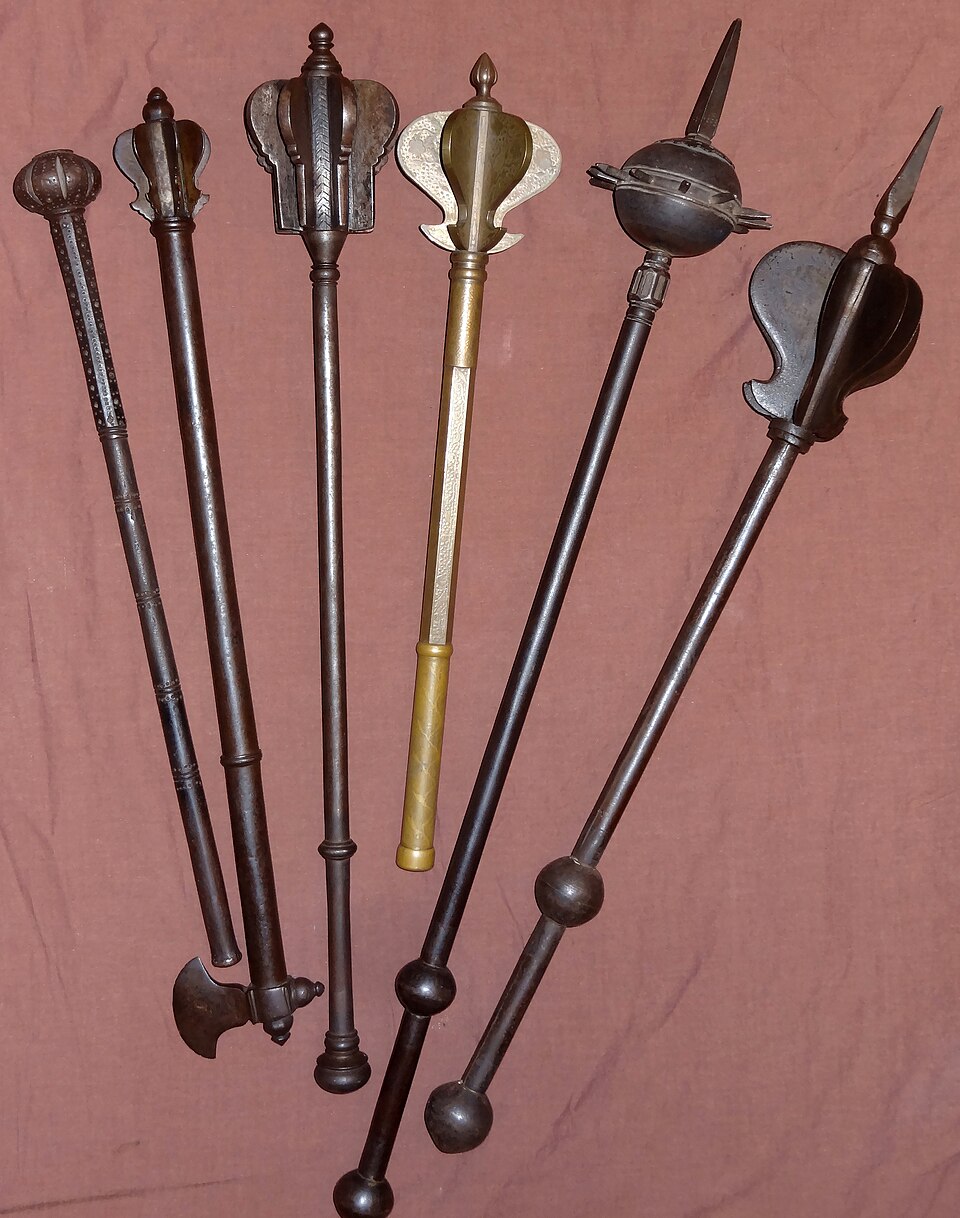
A mace is a blunt weapon, a type of club or virge that uses a heavy head on the end of a handle to deliver powerful strikes. A mace typically consists of a strong, heavy, wooden or metal shaft, often reinforced with metal, featuring a head made of stone, bone, copper, bronze, iron, or steel.
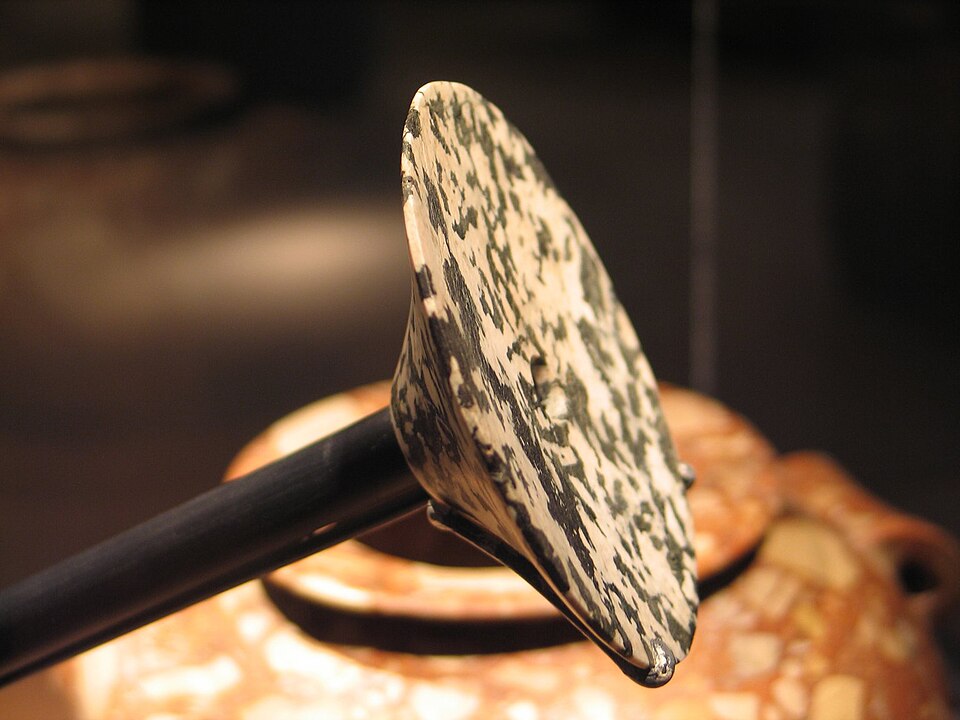
The head of a mace can be shaped with flanges or knobs to increase the pressure of an impact by focusing the force on a small point. They would bind on metal instead of sliding around it, allowing them to deliver more force to an armored opponent than a traditional mace. This effect increased the potential for the mace to injure an armored opponent through weak spots in the armor, and even damage plate armor by denting it, potentially binding overlapping plates and impeding the wearer's range of motion.
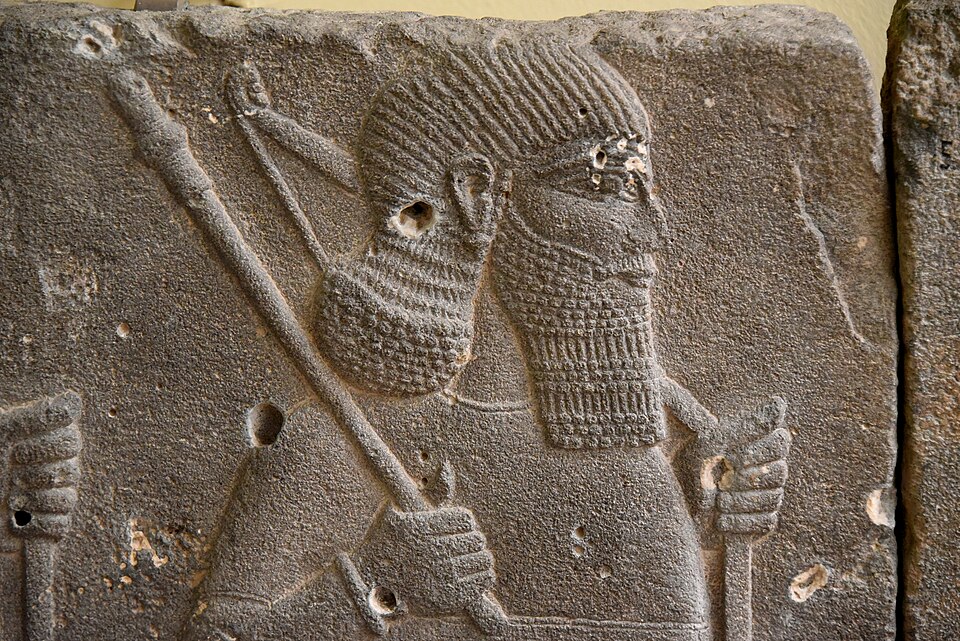
Maces are rarely used today for actual combat, but many government bodies (for instance, the British House of Commons and the U.S. Congress), universities and other institutions have ceremonial maces and continue to display them as symbols of authority. They are often paraded in academic, parliamentary or civic rituals and processions.
Further reading
Cossack Mace (Bulava) is one of the 3D puzzles in World Artifacts: turn a cloud of broken pieces until it lines up. For iPhone, iPad, Apple Vision Pro and Android.

