World Artifacts › Atlas › United States of America
Alligator
Alligators have a broad rounded snout, crocodiles a narrow one. The jaws shut with enormous force but open weakly, which is why a grown alligator's mouth can be held closed by hand.
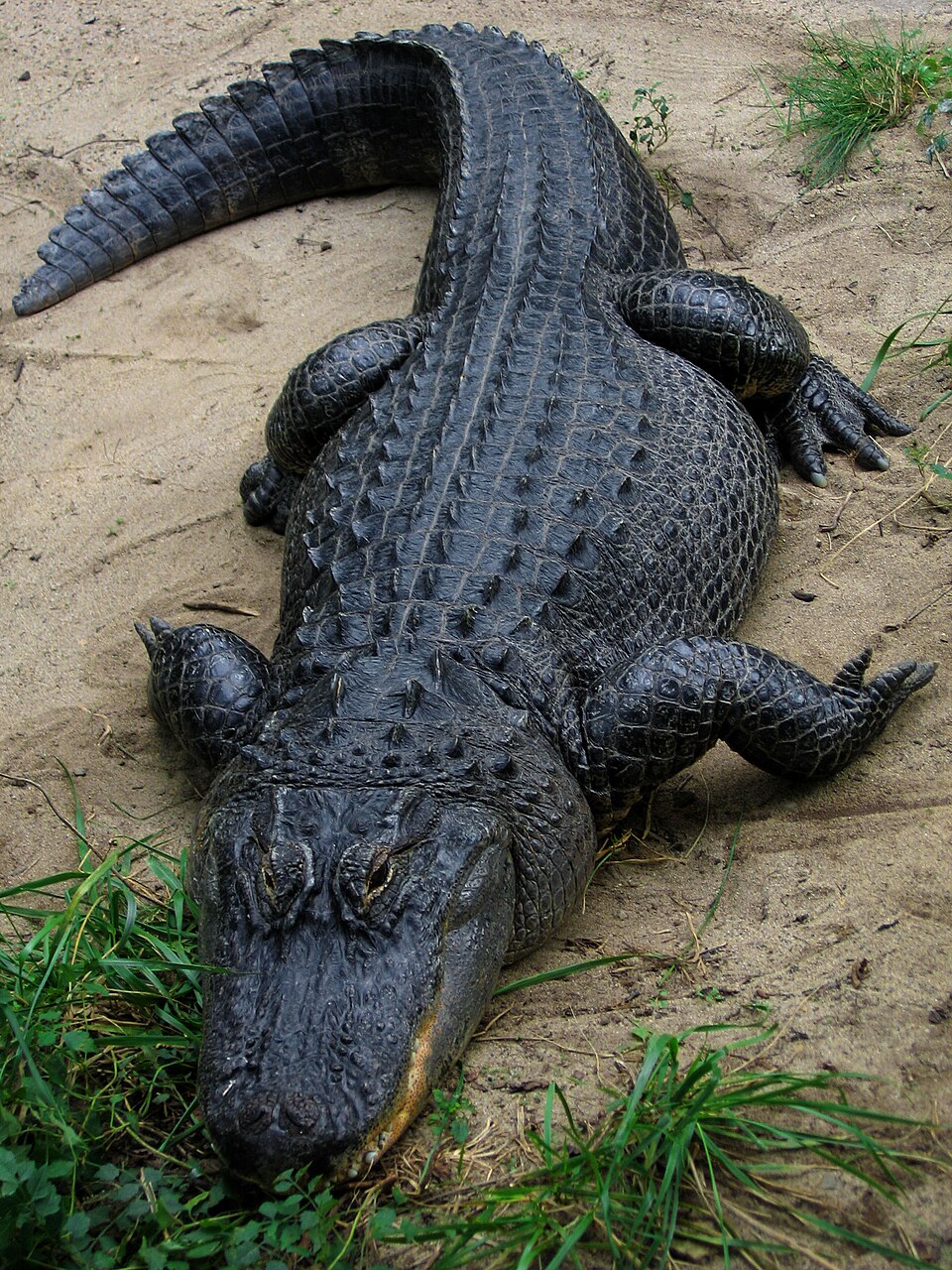
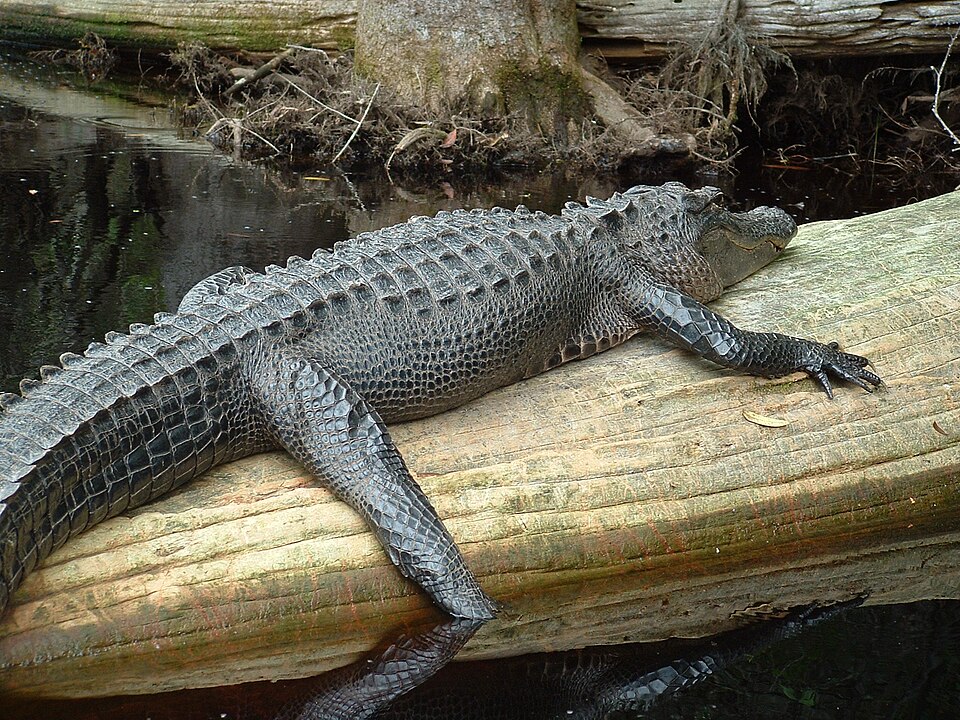
The American alligator (Alligator mississippiensis), sometimes referred to as a common alligator or just gator, is a large crocodilian reptile native to the Southeastern United States. It is one of the two extant species in the genus Alligator, and is larger than the only other living alligator species, the Chinese alligator.
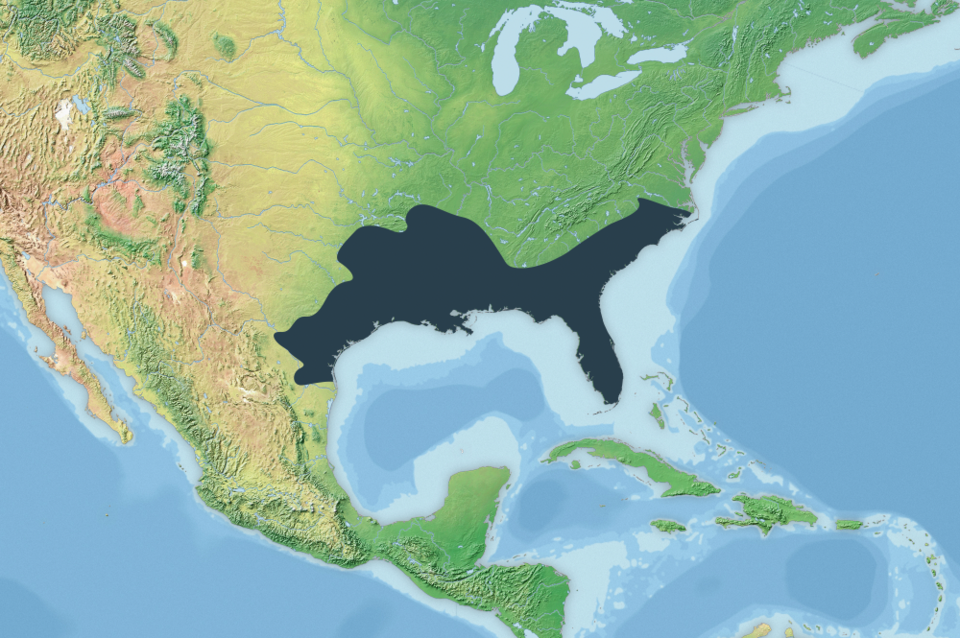
Adult male American alligators measure 3.4 to 4.8 m (11.2 to 15.7 ft) in length, and can weigh up to 450 kg (1,000 lb), with unverified sizes of up to 5.84 m (19.2 ft) and weights of 1,000 kg (2,200 lb) making it the heaviest member of the family Alligatoridae, and the second longest one, after the black caiman. Females are smaller, measuring 2.6 to 3.35 m (8.5 to 11.0 ft) in length. The American alligator inhabits subtropical and tropical freshwater wetlands, such as marshes and cypress swamps, from southern Oklahoma and Texas to North Carolina. It is distinguished from the sympatric American crocodile by its broader U-shaped snout, with overlapping jaws and darker coloration, and is less tolerant of saltwater but more tolerant of cooler climates than the American crocodile, which is found only in tropical and warm subtropical climates.
Further reading
- The Alligator's Life History · E. A. McIlhenny (1987)A study of the alligator's life history.Find a copy: AbeBooks · Amazon · WorldCat
- The last of the ruling reptiles · Wilfred T. Neill (1971)Covers crocodiles and alligators as the last of the ruling reptiles.Find a copy: AbeBooks · Amazon · WorldCat
Alligator is one of the 3D puzzles in World Artifacts: turn a cloud of broken pieces until it lines up. For iPhone, iPad, Apple Vision Pro and Android.

