World Artifacts › Atlas › United States of America
Apollo Lunar Lander
The lunar module is the only crewed craft ever built that never had to fly through air, so it needed no streamlining at all and could be made astonishingly flimsy. Parts of its skin were about as thick as kitchen foil.
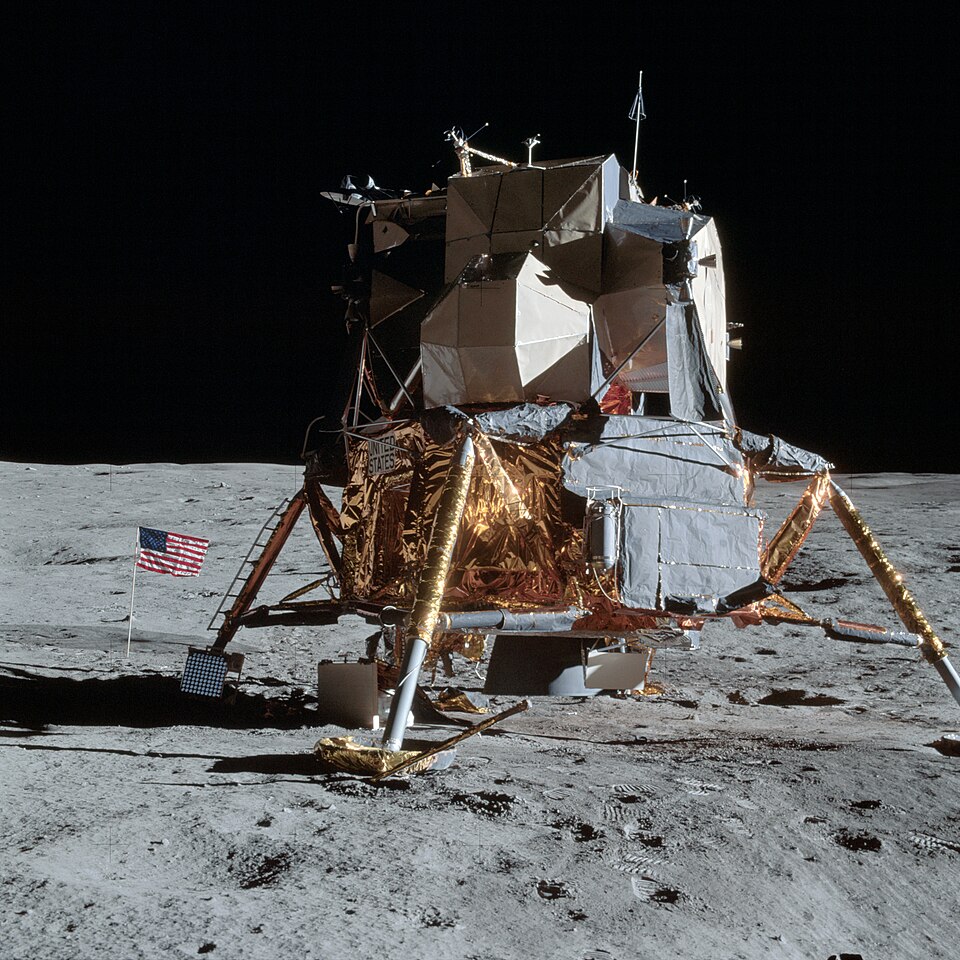
The Apollo Lunar Module (LM ), originally designated the Lunar Excursion Module (LEM), was the lunar lander spacecraft that was flown between lunar orbit and the Moon's surface during the United States' Apollo program. It was the first crewed spacecraft to operate exclusively in space, and remains the only crewed vehicle to land anywhere beyond Earth.
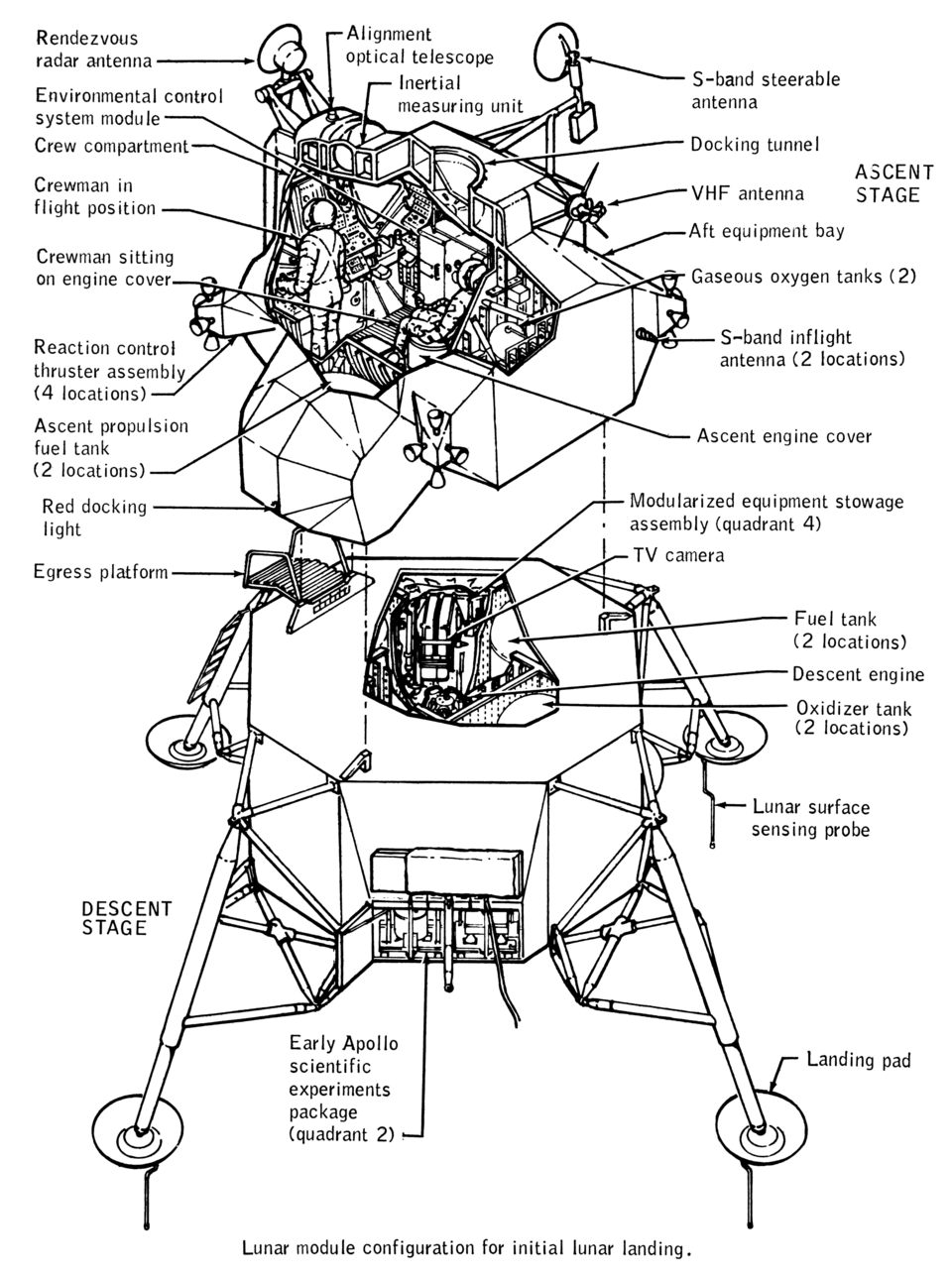
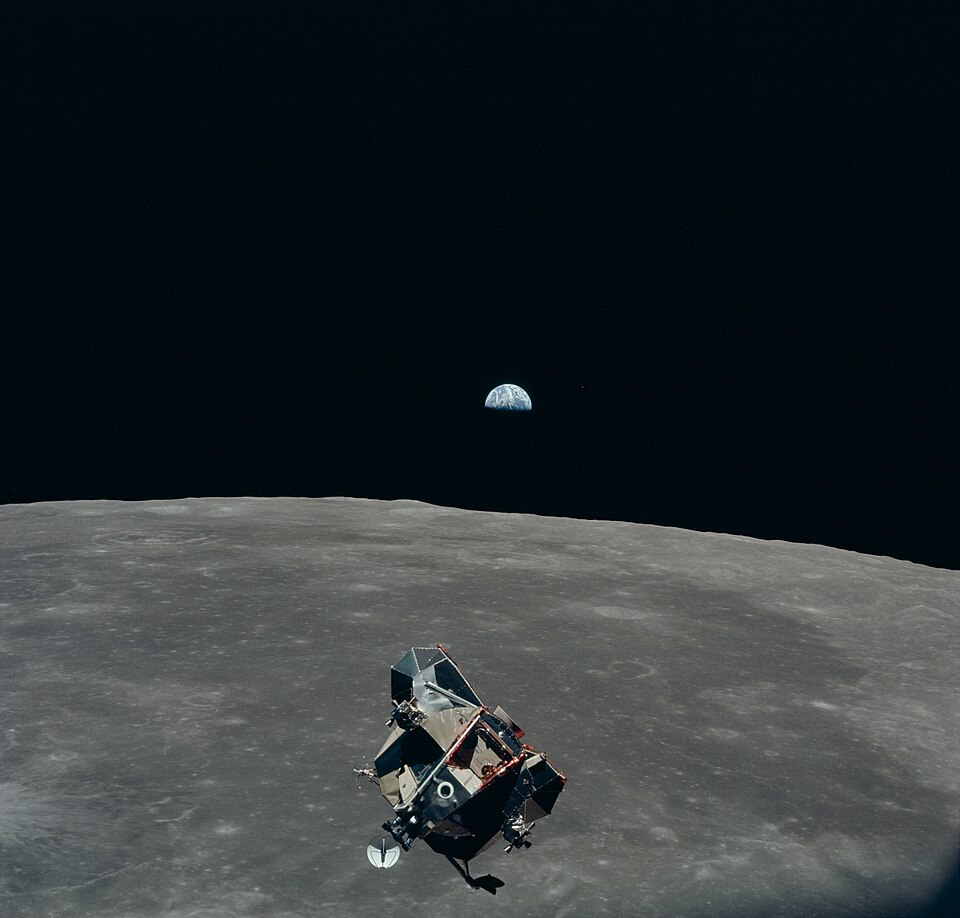
Structurally and aerodynamically incapable of flight through Earth's atmosphere, the two-stage Lunar Module was ferried to lunar orbit attached to the Apollo command and service module (CSM), about twice its mass. Its crew of two flew the Lunar Module from lunar orbit to the Moon's surface. During takeoff, the spent descent stage was used as a launch pad for the ascent stage which then flew back to the command module, after which it was also discarded.
Overseen by Grumman, the LM's development was plagued with problems that delayed its first uncrewed flight by about ten months and its first crewed flight by about three months. Regardless, the LM became the most reliable component of the Apollo-Saturn space vehicle. The total cost of the LM for development and the units produced was $21.65 billion in 2016 dollars, adjusting from a nominal total of $2.29 billion using the NASA New Start Inflation Indices.
Further reading
Apollo Lunar Lander is one of the 3D puzzles in World Artifacts: turn a cloud of broken pieces until it lines up. For iPhone, iPad, Apple Vision Pro and Android.

