World Artifacts › Atlas › United States of America
Jukebox
The name comes from the juke joints of the American South, where the machines let a bar have music with no band to pay. Wurlitzer added the bubble tubes so the box would still catch an eye when the room was dark.
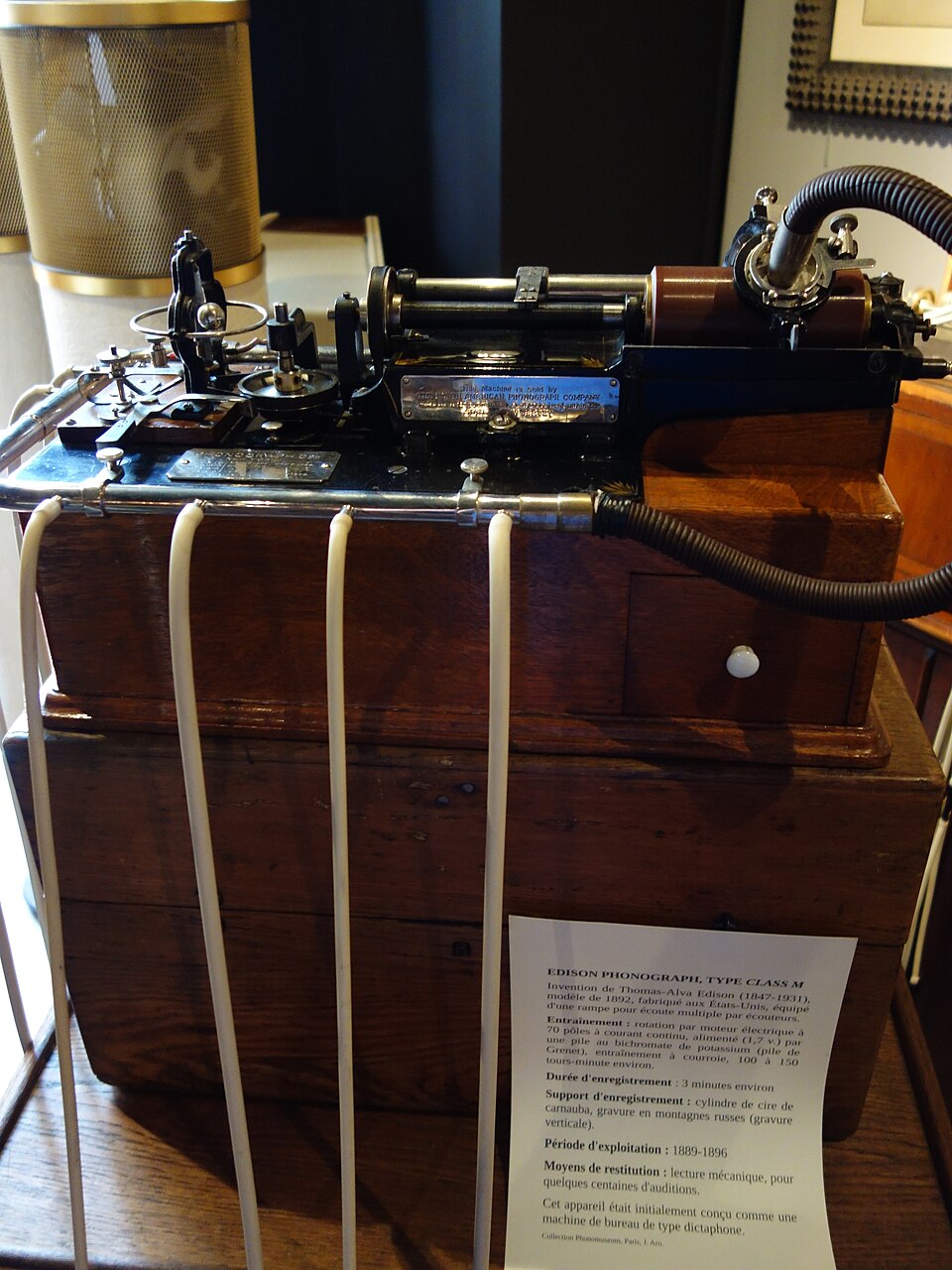
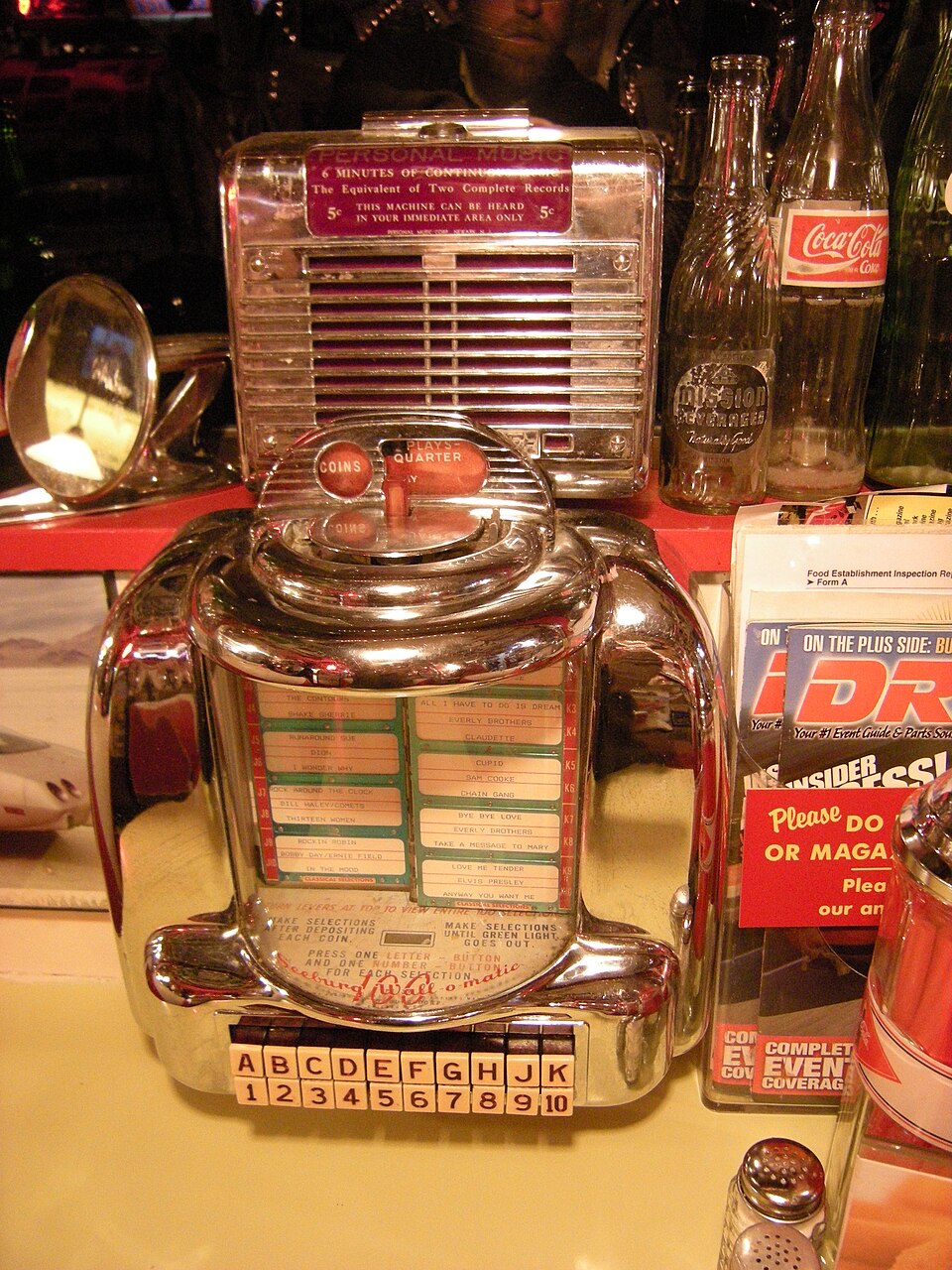
A jukebox is a partially automated music-playing device, usually a coin-operated machine, that plays a user-selected song from a self-contained media library. Traditional jukeboxes contain records, compact discs, or digital files, and allow users to select songs through mechanical buttons, a touch screen, or keypads. They were most commonly found in diners, bars, and entertainment venues throughout the 20th century.
The modern concept of the jukebox evolved from earlier automatic phonographs of the late 19th century. The first coin-operated phonograph was introduced by Louis Glass and William S. Arnold in 1889 at the Palais Royale Saloon in San Francisco. The term “jukebox” came into use in the United States beginning in 1940, referring to “juke joints”, itself derived from the Gullah word juke, which means “bawdy”. Manufacturers of jukeboxes tried to avoid using the term, associated with unreputable places, for many years.
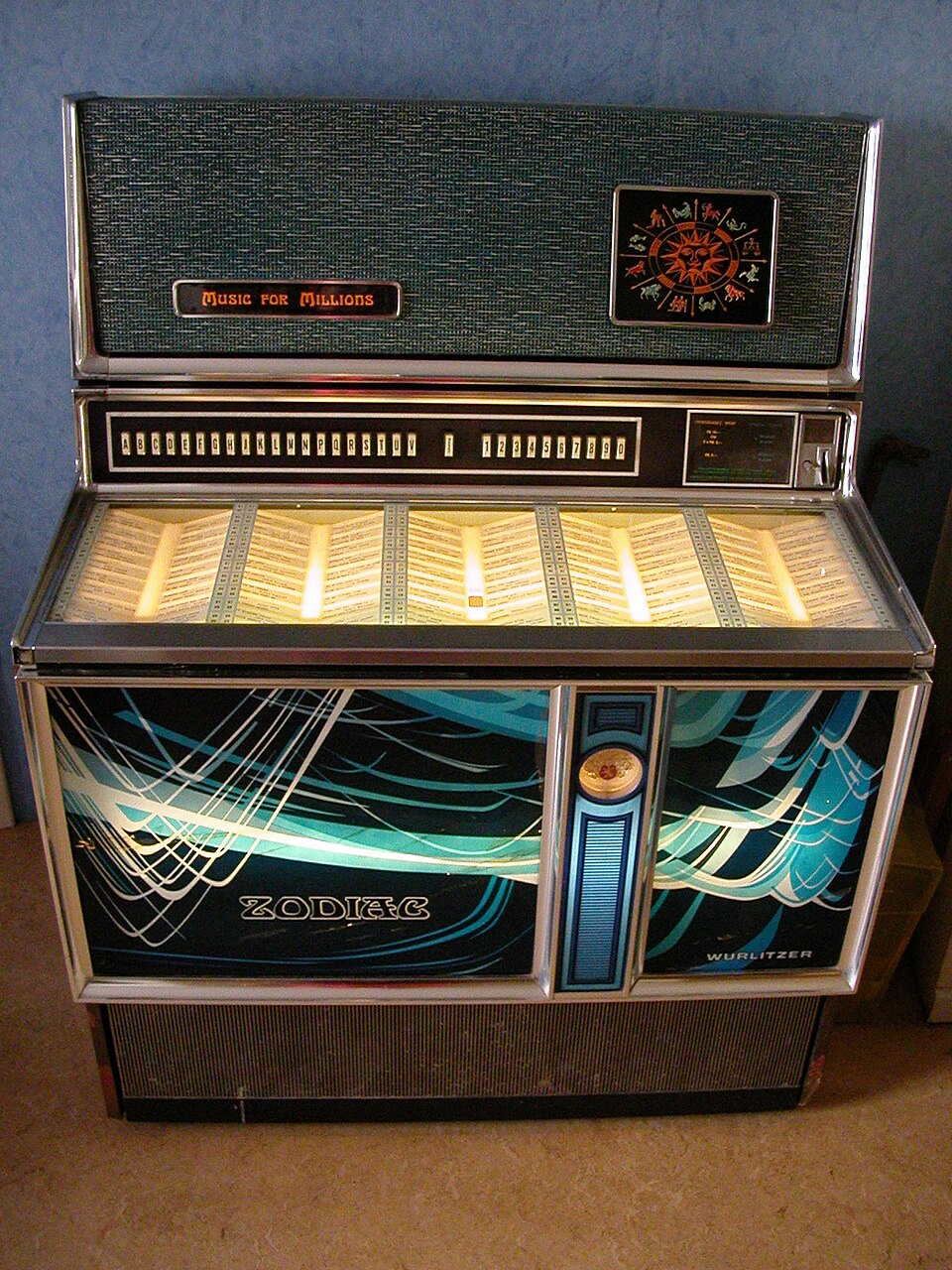
Jukeboxes became especially popular from the 1940s to the 1960s, with models produced by companies such as Wurlitzer, Seeburg, Rock-Ola, and AMI. In the digital age, traditional jukeboxes have been largely replaced by internet-enabled systems and digital streaming services, though vintage and retro-style jukeboxes remain popular in niche markets and among collectors.
Further reading
Jukebox is one of the 3D puzzles in World Artifacts: turn a cloud of broken pieces until it lines up. For iPhone, iPad, Apple Vision Pro and Android.

