World Artifacts › Atlas › United States of America
The Mayflower
The Mayflower was a wine and cargo ship, not a passenger vessel, and 102 people spent sixty-six days in a space with no cabins. The agreement they signed on board was written because they had landed far outside the territory their patent covered.
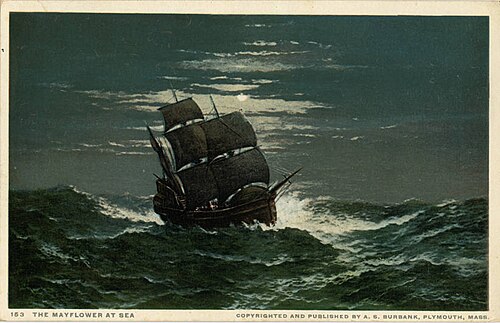
Mayflower was an English square-rigged merchant sailing ship, active from before 1609 until 1622. Her tonnage was 180+, and she was 110 feet (34 meters) long and 25 feet (7.5 meters) in the beam, with several decks. She was notable in that she transported a group of English families, known today as the Pilgrims, from England to the New World in 1620.
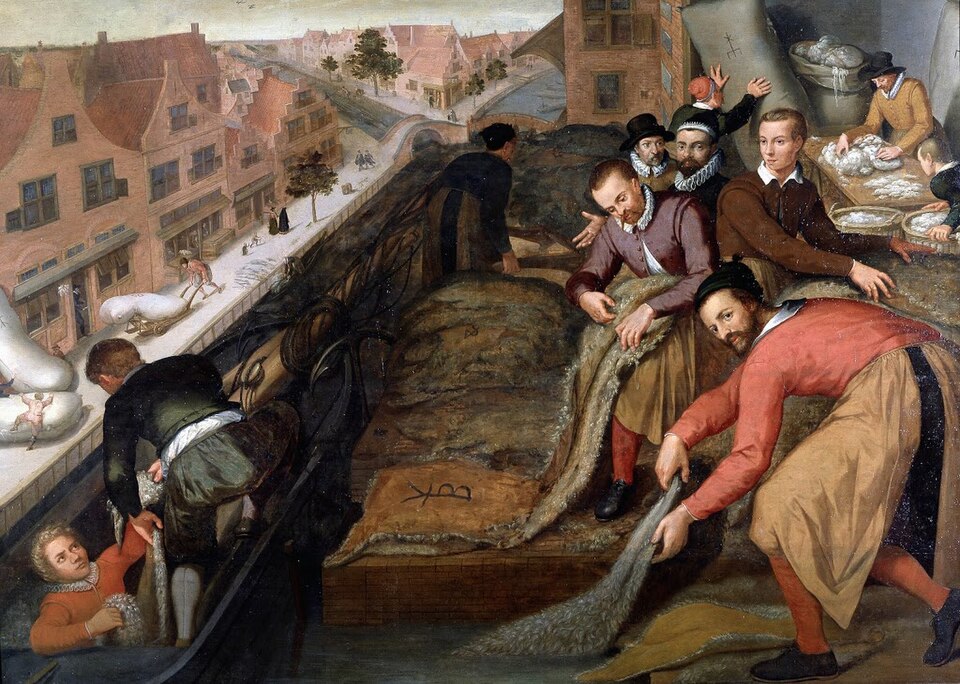
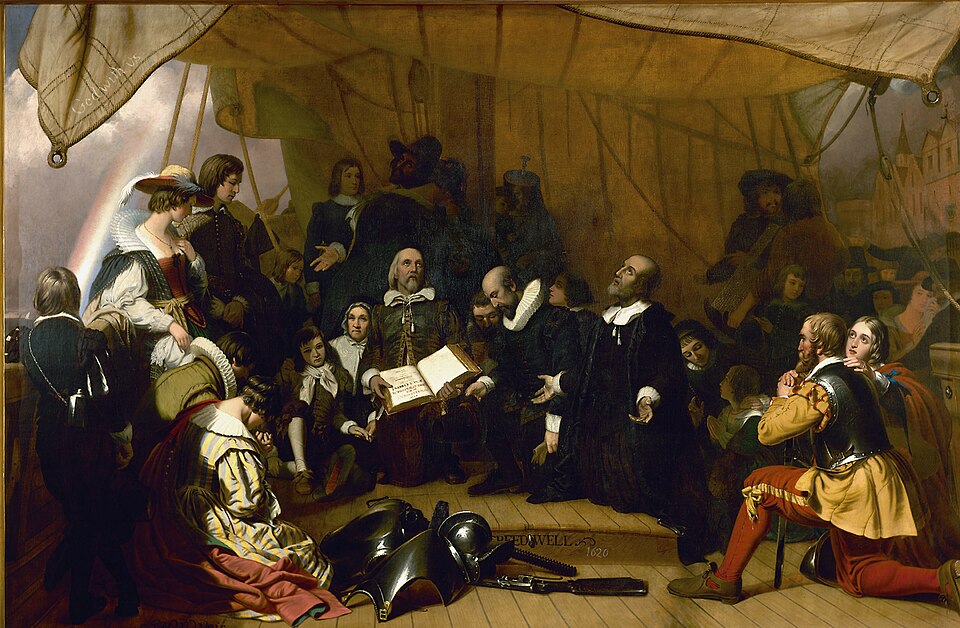
After 10 weeks at sea, Mayflower, with 102 passengers and a crew of about 30, reached what is today the United States, dropping anchor near the tip of Cape Cod, Massachusetts on 21 November [O.S. 11 November] 1620. The Pilgrims, often conflated with the Puritans (who sought to reform and purify the Church of England from within), sought separation from the church and prayed privately. They believed that the church's resistance to reform and its Roman Catholic past left it beyond redemption. Starting in 1608, a group of English families departed England for the Netherlands, where they could worship freely. By 1620, the community resolved to cross the Atlantic Ocean for America, which they considered a "new Promised Land" where they would establish Plymouth Colony.
Further reading
- The Mayflower and Her Passengers · Caleb H. Johnson (2006)Covers the ship Mayflower and its passengers, with biographies of the Pilgrims.Find a copy: AbeBooks · Amazon · WorldCat
- Mayflower · Nathaniel Philbrick (2006)A history of the Mayflower Pilgrims and their settlement at New Plymouth, including wars with Native Americans.Find a copy: AbeBooks · Amazon · WorldCat
The Mayflower is one of the 3D puzzles in World Artifacts: turn a cloud of broken pieces until it lines up. For iPhone, iPad, Apple Vision Pro and Android.

