World Artifacts › Atlas › United States of America
Wright Flyer
The first flight lasted twelve seconds and covered about 120 feet, less than the wingspan of a modern jumbo jet. Four flights were made that morning, and a gust then flipped the machine and wrecked it.
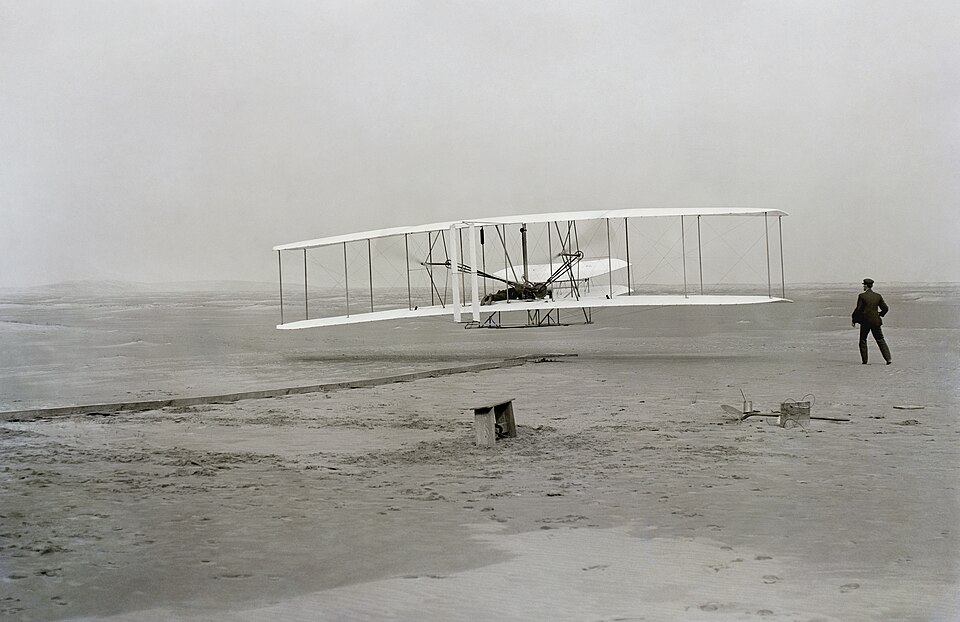
The Wright Flyer (also known as the Kitty Hawk, Flyer I or the 1903 Flyer) made the first sustained flight by a manned heavier-than-air powered and controlled aircraft on December 17, 1903. Invented and flown by brothers Orville and Wilbur Wright, it marked the beginning of the pioneer era of aviation.
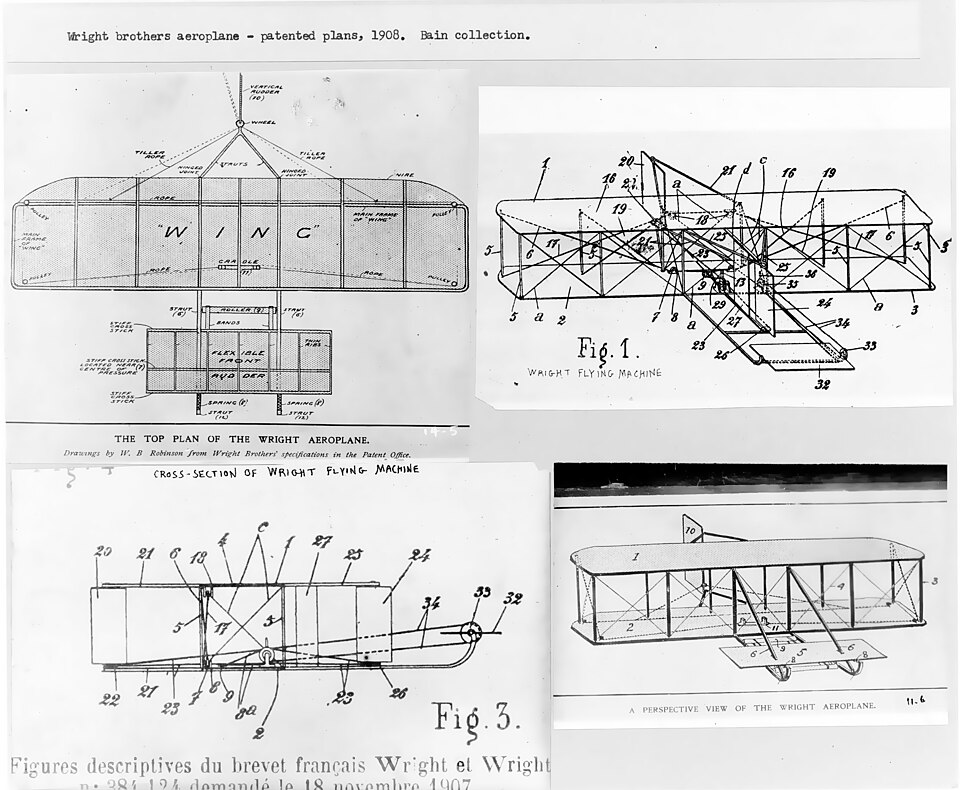
The aircraft is a single-place biplane design with anhedral (drooping) wings, front double elevator (a canard) and rear double rudder. It used a 12 horsepower (9 kilowatts) gasoline engine powering two pusher propellers. Employing "wing warping", it was relatively unstable and very difficult to fly.
The Wright brothers flew it four times in a location now part of the town of Kill Devil Hills, about 4 miles (6 kilometers) south of Kitty Hawk, North Carolina. The airplane flew 852 ft (260 m) on its fourth and final flight, but was damaged on landing, and wrecked minutes later when powerful gusts blew it over.
The brothers shipped the wreckage back to Dayton, and the aircraft never flew again. Orville later restored it and displayed it on several occasions. The Flyer joined the Smithsonian Institution's collection of historic aircraft in 1948 after the end of a long and bitter dispute between Orville and the Institution over its refusal to recognize the Flyer as the first successful airplane. Today, it is on display in a place of honor in the National Air and Space Museum in Washington, D.C.
Further reading
- The Wright Flyer · Howard S. Wolko (1986)Congress proceedings on the design and construction of the Wright Flyer airplane.Find a copy: AbeBooks · Amazon · WorldCat
- The Wright Brothers · David McCullough (2015)A biography of the Wright brothers and the history of their aeronautics work.Find a copy: AbeBooks · Amazon · WorldCat
Wright Flyer is one of the 3D puzzles in World Artifacts: turn a cloud of broken pieces until it lines up. For iPhone, iPad, Apple Vision Pro and Android.

