World Artifacts › Atlas › Uzbekistan
Sumalak Pot
The great Navruz pot.
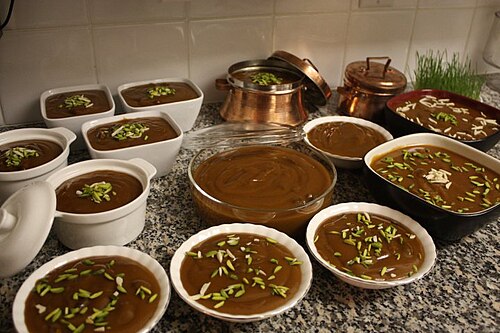
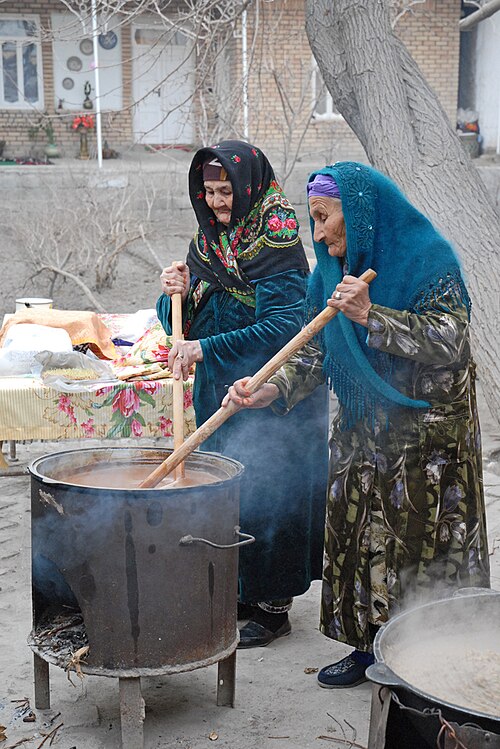
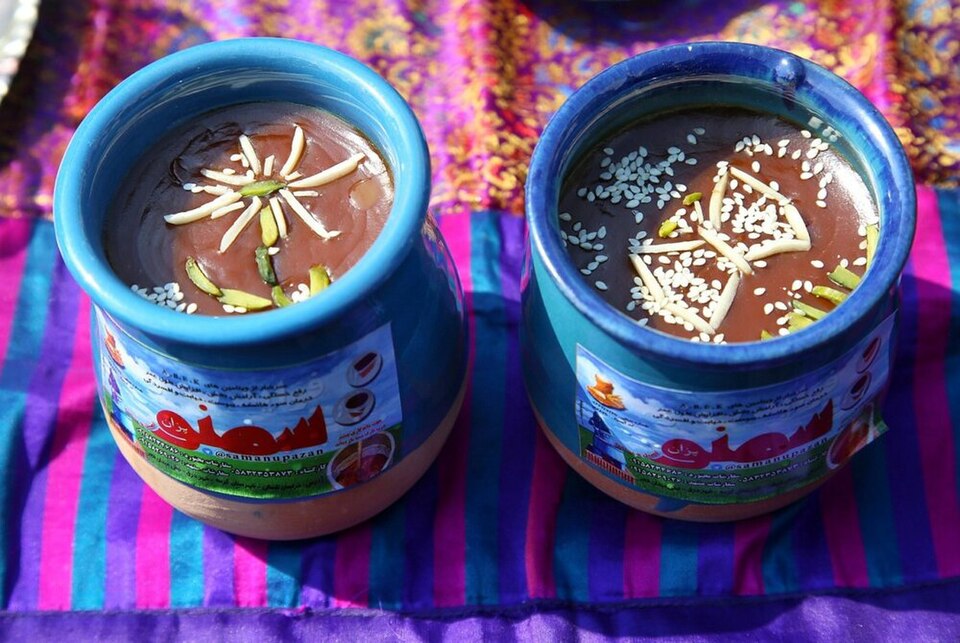
Samanu (Persian: سمنو; Azerbaijani: səməni halvası), samanak (Persian: سمنک), sümelek (Kazakh: сүмелек; Turkmen: sümelek / syumelek), sumanak (Tajik: суманак), sumalak (Uzbek pronunciation: [sʉmælˈæk]), or sümölök (Kyrgyz: сүмөлөк [symœlˈœk]) is a sweet paste made from germinated wheat (young wheatgrass) and wheat flour, which is prepared especially for Nowruz (beginning of spring) in a large pot (like a kazan). This practice has been traced back to the pre-Islamic Sasanian Persian Empire. Although Samanu is prominent for "Haft-Sin" (the seven symbolic items traditionally displayed at Nowruz), the preparation "mela" (referring to a picnic) and eating it is traditional in Afghanistan.
Sumalak Pot is one of the 3D puzzles in World Artifacts: turn a cloud of broken pieces until it lines up. For iPhone, iPad, Apple Vision Pro and Android.

