World Artifacts › Atlas › Uzbekistan
Suzani
The embroidered cloth with pomegranates.
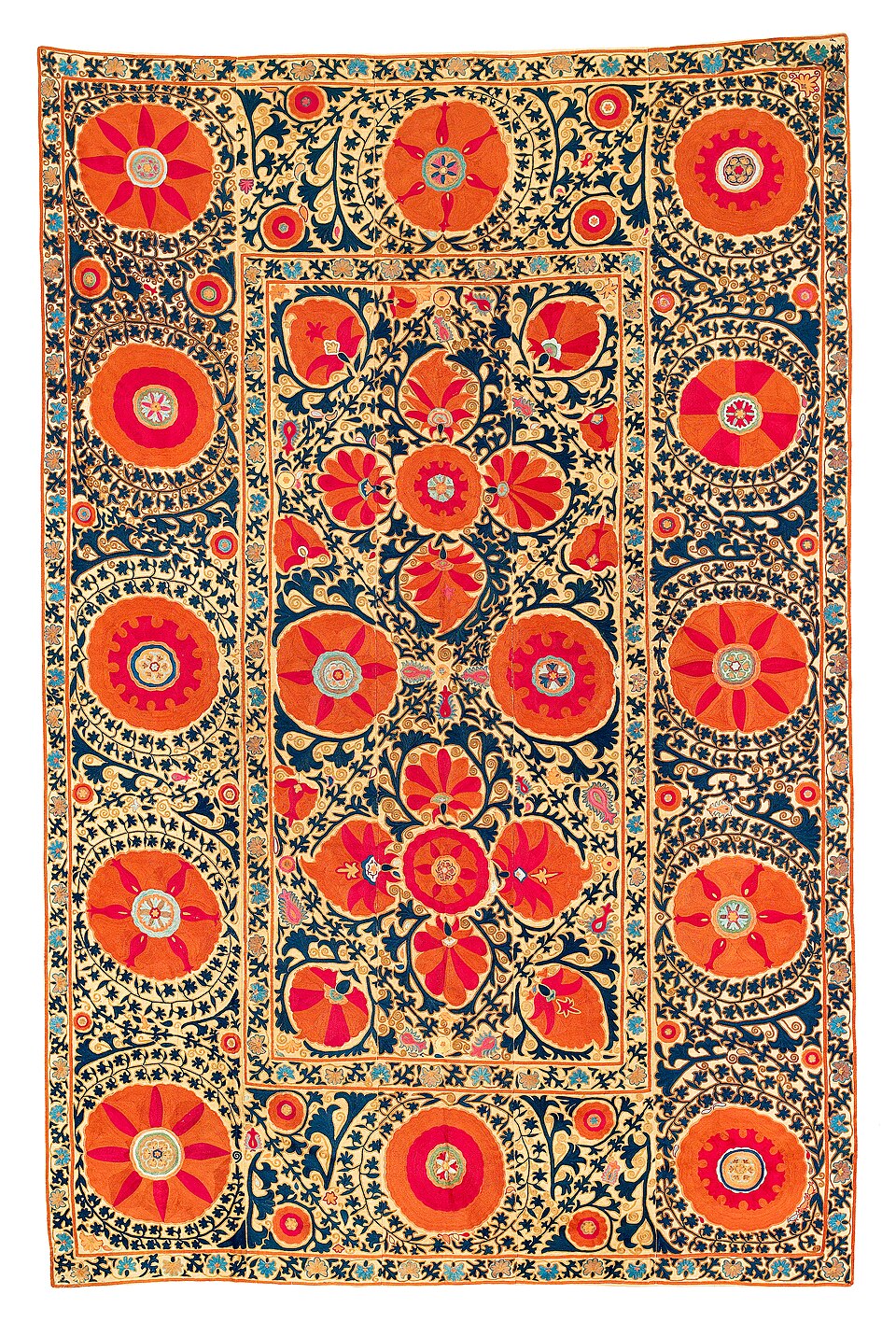
Suzani is a type of embroidered and decorative tribal textile made in Tajikistan, Uzbekistan, Afghanistan and other Central Asian countries. Suzani is from Persian: سوزن, romanized: Suzan, lit. 'needle' (Tajik: сӯзан Tajik pronunciation: [sɵ.zän]). The art of making such textiles in Iran is called سوزندوزی suzandozi "needlework".
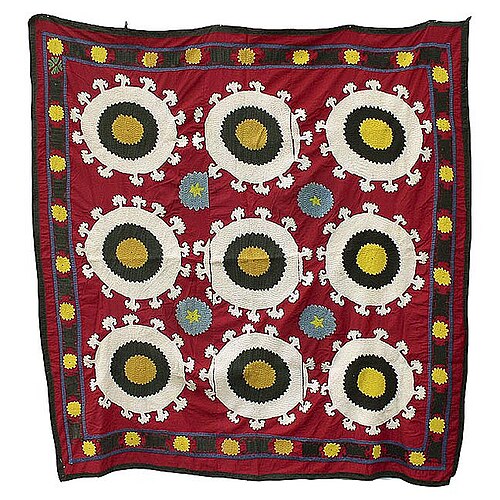
Suzanis are delicate; extremely few examples survive before the late 18th and early 19th centuries. However, they belong to a very ancient tradition. In the early 15th century, Ruy González de Clavijo, the Castilian ambassador to the court of Timur, left detailed descriptions of embroideries that were probably forerunners of the suzani.
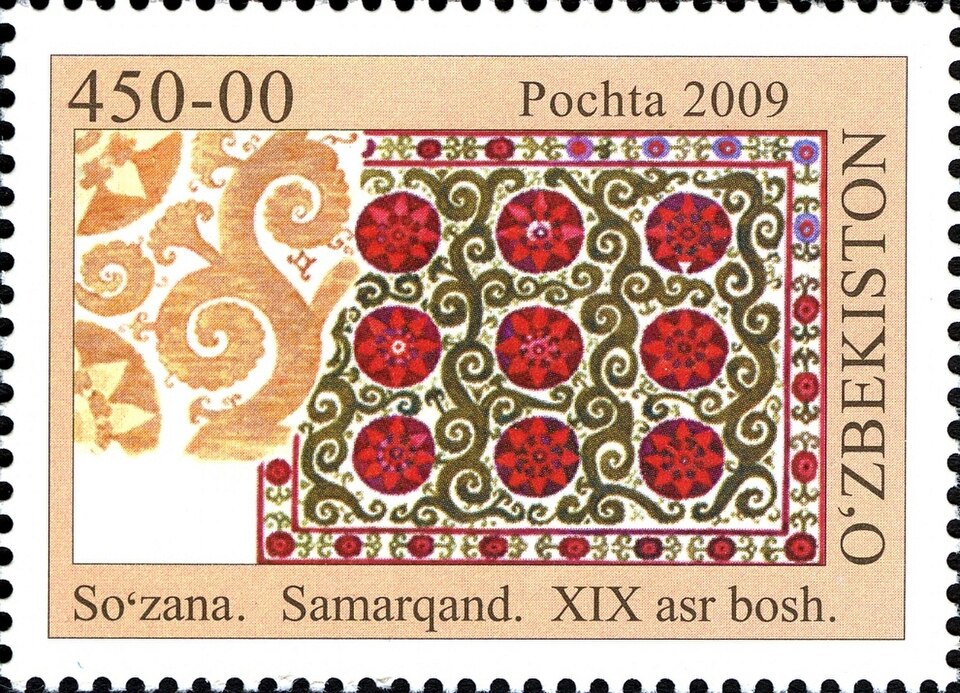
Suzanis were traditionally made by Central Asian brides as part of their dowry, and were presented to the groom on the wedding day.
Further reading
Suzani is one of the 3D puzzles in World Artifacts: turn a cloud of broken pieces until it lines up. For iPhone, iPad, Apple Vision Pro and Android.

