World Artifacts › Atlas › Vatican
Pietà
The sculpture of Mary holding Christ.
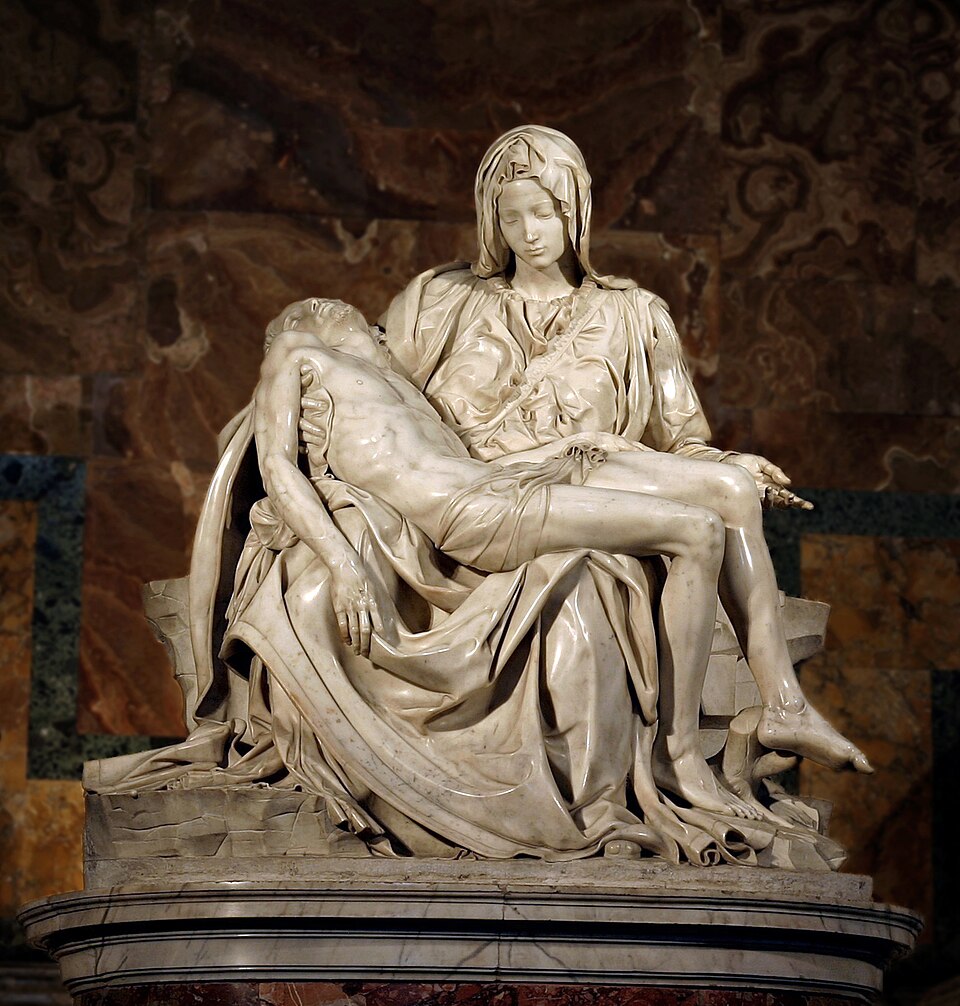
The Pietà (Madonna della Pietà, Italian: [maˈdɔnna della pjeˈta]; '[Our Lady of] Pity'; 1498-1499) is a Carrara marble sculpture of Jesus and Mary at Mount Golgotha representing the "Sixth Sorrow" of the Virgin Mary by Michelangelo Buonarroti, in Saint Peter's Basilica, Vatican City, for which it was made. It is a key work of Italian Renaissance sculpture and often taken as the start of the High Renaissance.
The sculpture captures the moment when Jesus, taken down from the cross, is given to his mother Mary. Mary looks younger than Jesus; art historians believe Michelangelo was inspired by a passage in Dante Alighieri's Divine Comedy: "O virgin mother, daughter of your Son [...] your merit so ennobled human nature that its divine Creator did not hesitate to become its creature" (Paradiso, Canto XXXIII). Michelangelo's aesthetic interpretation of the Pietà is unprecedented in Italian sculpture because it balances early forms of naturalism with the Renaissance ideals of classical beauty.
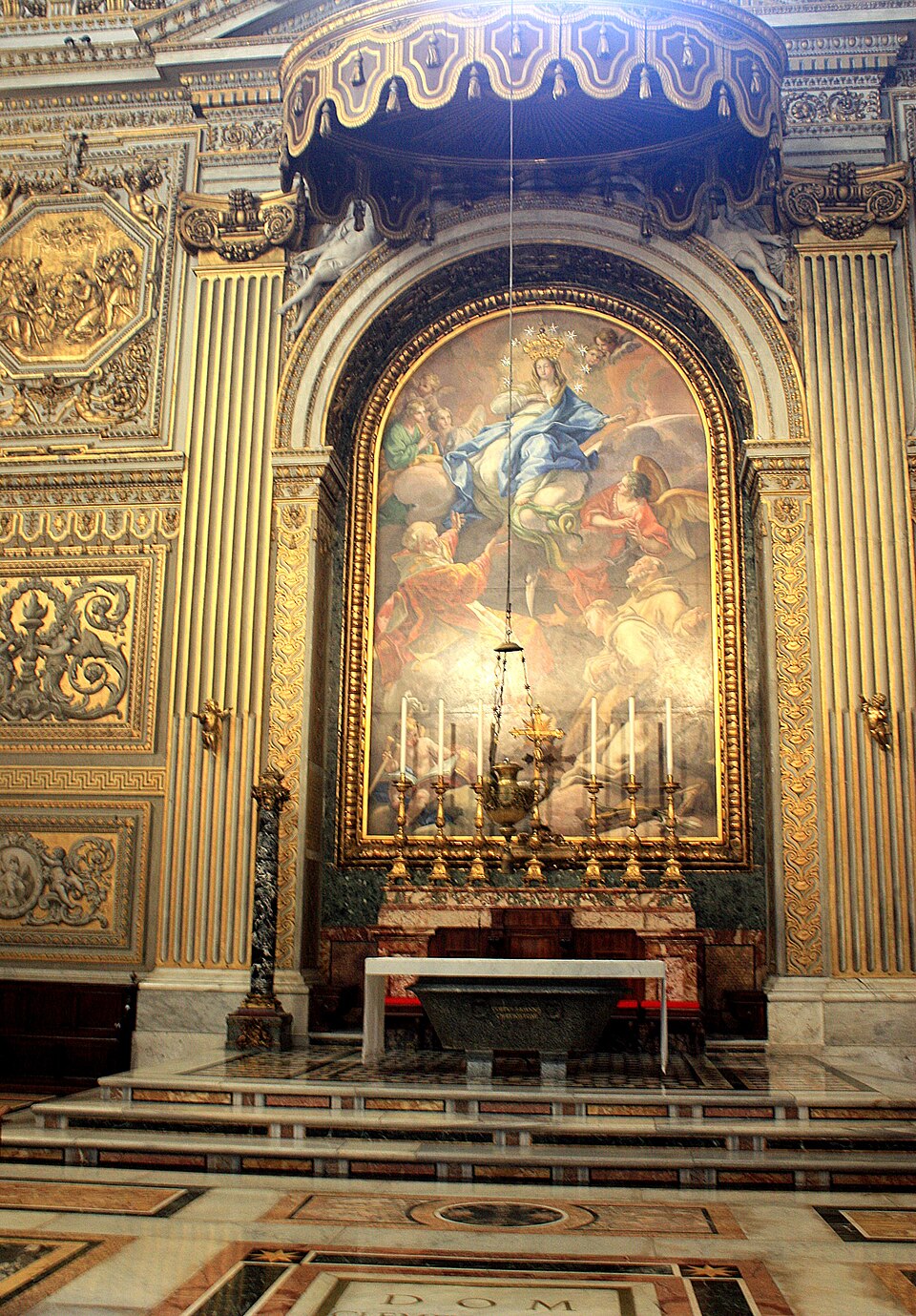
The statue was originally commissioned by a French cardinal, Jean Bilhères de Lagraulas, then French ambassador in Rome. The sculpture was made, probably as an altarpiece, for the cardinal's funeral chapel in Old St Peter's. When this was demolished it was preserved, and later took its current location, the first chapel on the north side after the entrance of the new basilica, in the 18th century. It is the only piece Michelangelo ever signed.
Further reading
Pietà is one of the 3D puzzles in World Artifacts: turn a cloud of broken pieces until it lines up. For iPhone, iPad, Apple Vision Pro and Android.

