World Artifacts › Atlas › Venezuela
Hallaca
The wrapped tamale.
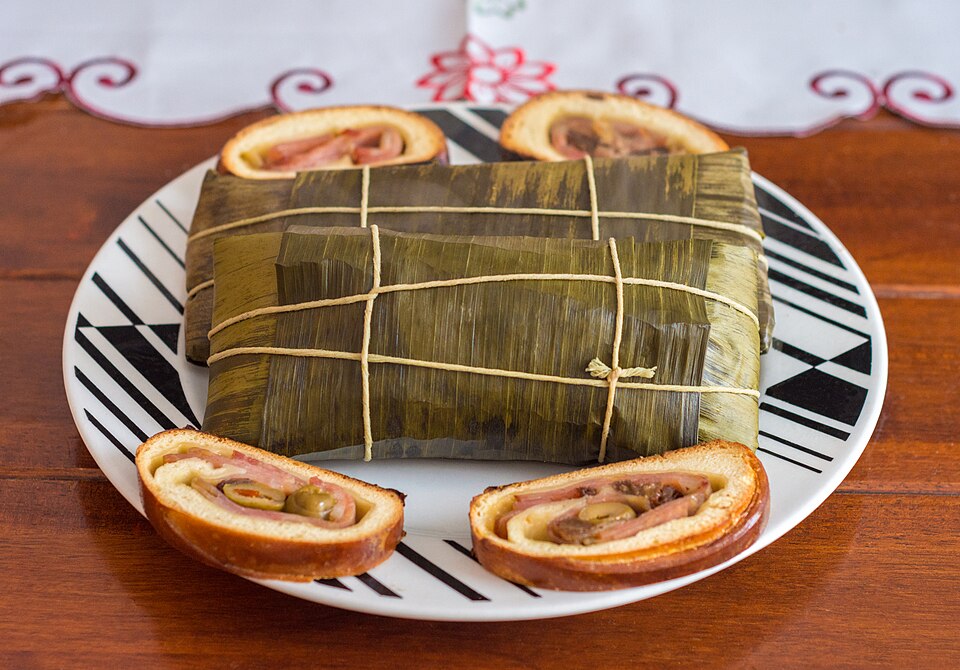
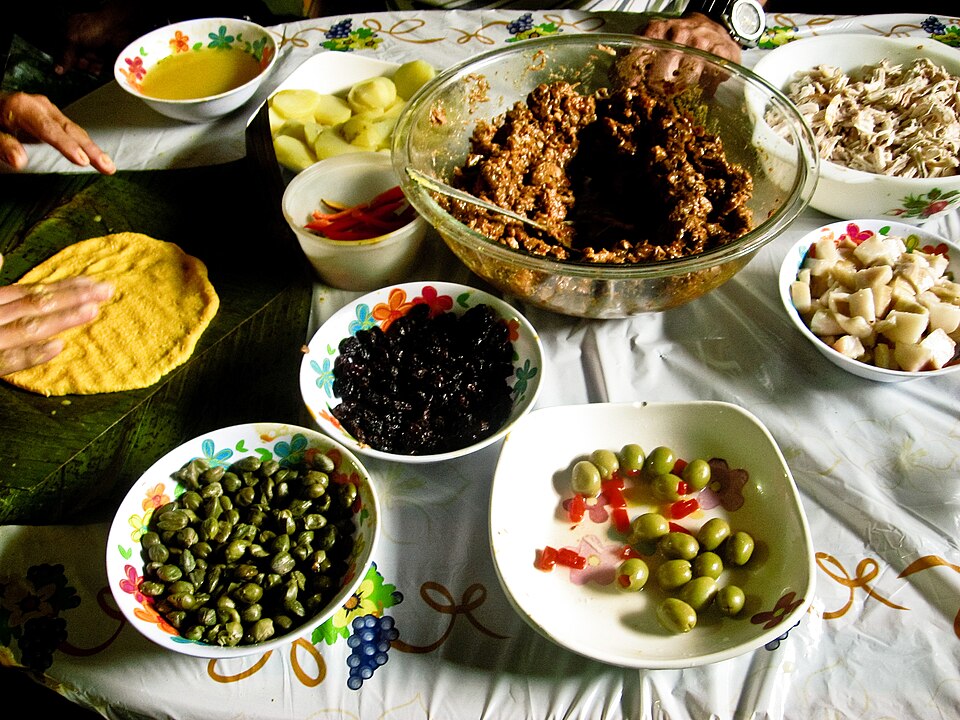
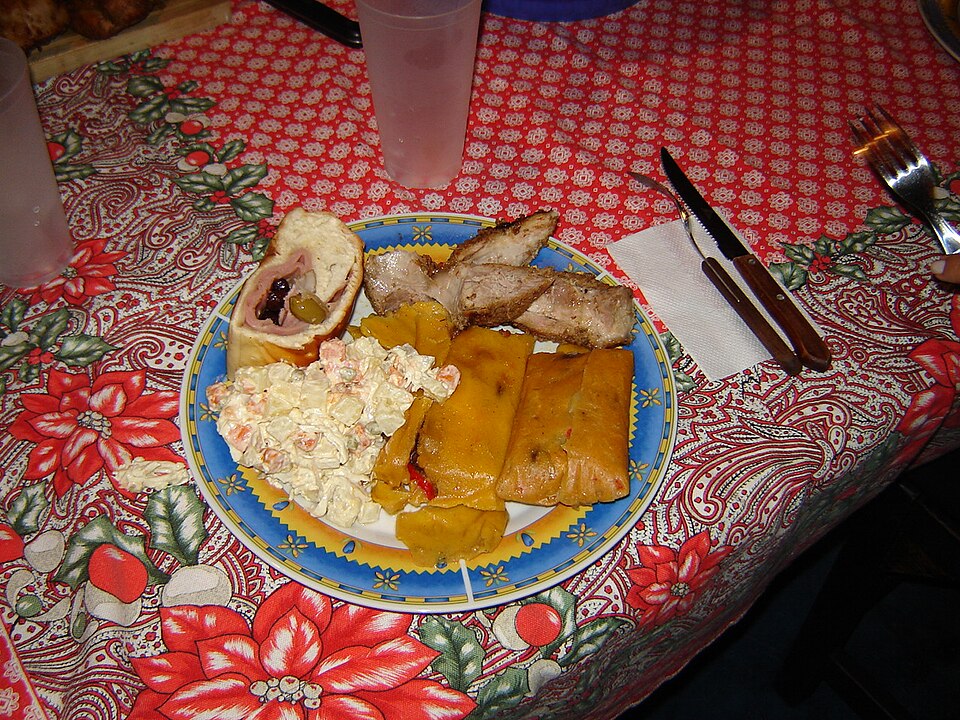
Hallaca (Spanish pronunciation: [aˈʎaka], [aˈʝaka]) is a traditional South American dish. Its origin is indigenous, but raisins, capers, olives, and sometimes bits of bacon were added in the 16th Century and after by settlers from the Iberian Peninsula. Hallaca consists of corn dough stuffed with a stew of beef, pork, or chicken and other ingredients such as raisins, capers, and olives, fresh onion rings, red and green bell pepper slices. There are vegetarian hallacas, made with black beans or tofu. Hallacas are folded in plantain leaves, tied with strings, and boiled. The dish is traditionally served during the Christmas season and has several regional variants. It has been described as a national dish of Venezuela. Some speculate it originated from the Orinoquia. Characteristic of the hallaca is the delicate corn dough made with consommé or broth, and lard colored with annatto. Hallacas are also commonly eaten in eastern Cuba, Trinidad where it is called pastelle, and parts of Colombia, Ecuador, Aruba, and Curaçao.
Further reading
- The South American Table · Maria Baez Kijac (2003)Covers the cooking and social life of South America as a whole, including Latin American cuisine.Find a copy: AbeBooks · Amazon · WorldCat
- Food cultures of the world encyclopedia · Ken Albala (2011)Encyclopedia of food habits across world cultures, with an entry on Venezuela.Find a copy: AbeBooks · Amazon · WorldCat
Hallaca is one of the 3D puzzles in World Artifacts: turn a cloud of broken pieces until it lines up. For iPhone, iPad, Apple Vision Pro and Android.

