World Artifacts › Atlas › Vietnam
Dragon Dance
The dragon is carried on poles by a team who run it in waves, and it is not the same as the lion dance: the dragon needs a dozen people and a long street. A longer dragon means a richer sponsor, which is largely the point.
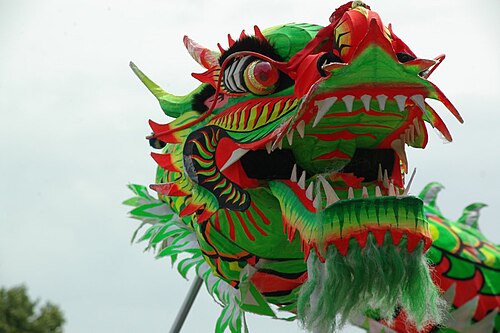
Dragon dance (simplified Chinese: 舞龙; traditional Chinese: 舞龍; pinyin: wǔ lóng; Jyutping: mou5 lung4) is a form of traditional dance and performance in Chinese culture. Like the lion dance, it is most often seen during festive celebrations. The dance is performed by a team of experienced dancers who manipulate a long flexible giant puppet of a dragon using poles positioned at regular intervals along the length of the dragon. The dance team simulates the imagined movements of this mythological creature in a sinuous, undulating manner.
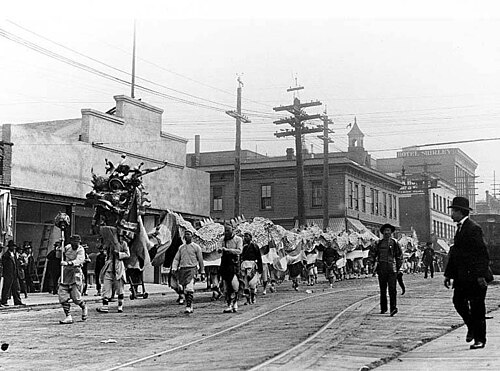
The dragon dance is often performed during Chinese New Year. The Chinese dragon is a symbol of China's culture, and it is believed to bring good luck to people, therefore the longer the dragon is in the dance, the more luck it will bring to the community. The dragons are believed to possess qualities that include great power, dignity, fertility, wisdom and auspiciousness. The appearance of a dragon is both fearsome and bold but it has a benevolent disposition, and it was an emblem to represent imperial authority. The movements in a performance traditionally symbolize the power and dignity of the dragon.
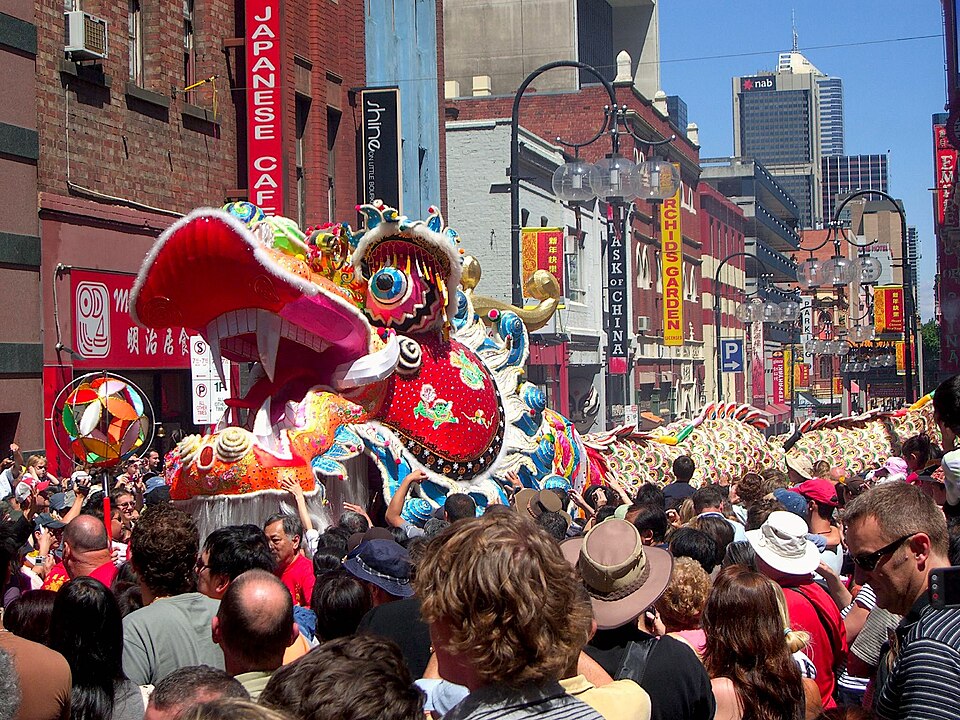
Dragon Dance is one of the 3D puzzles in World Artifacts: turn a cloud of broken pieces until it lines up. For iPhone, iPad, Apple Vision Pro and Android.

