World Artifacts › Atlas › Vietnam
Hue Citadel Gate
The citadel was laid out as a smaller copy of Beijing's Forbidden City, with a forbidden purple city inside it for the emperor alone. Most of it was destroyed in a month of fighting in 1968, and only a handful of the original buildings are left.
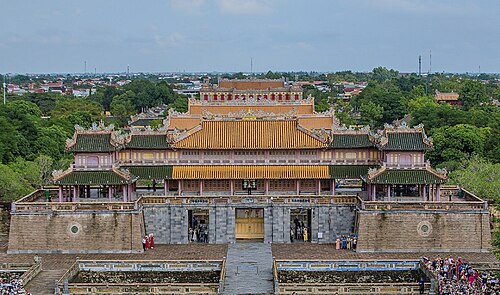
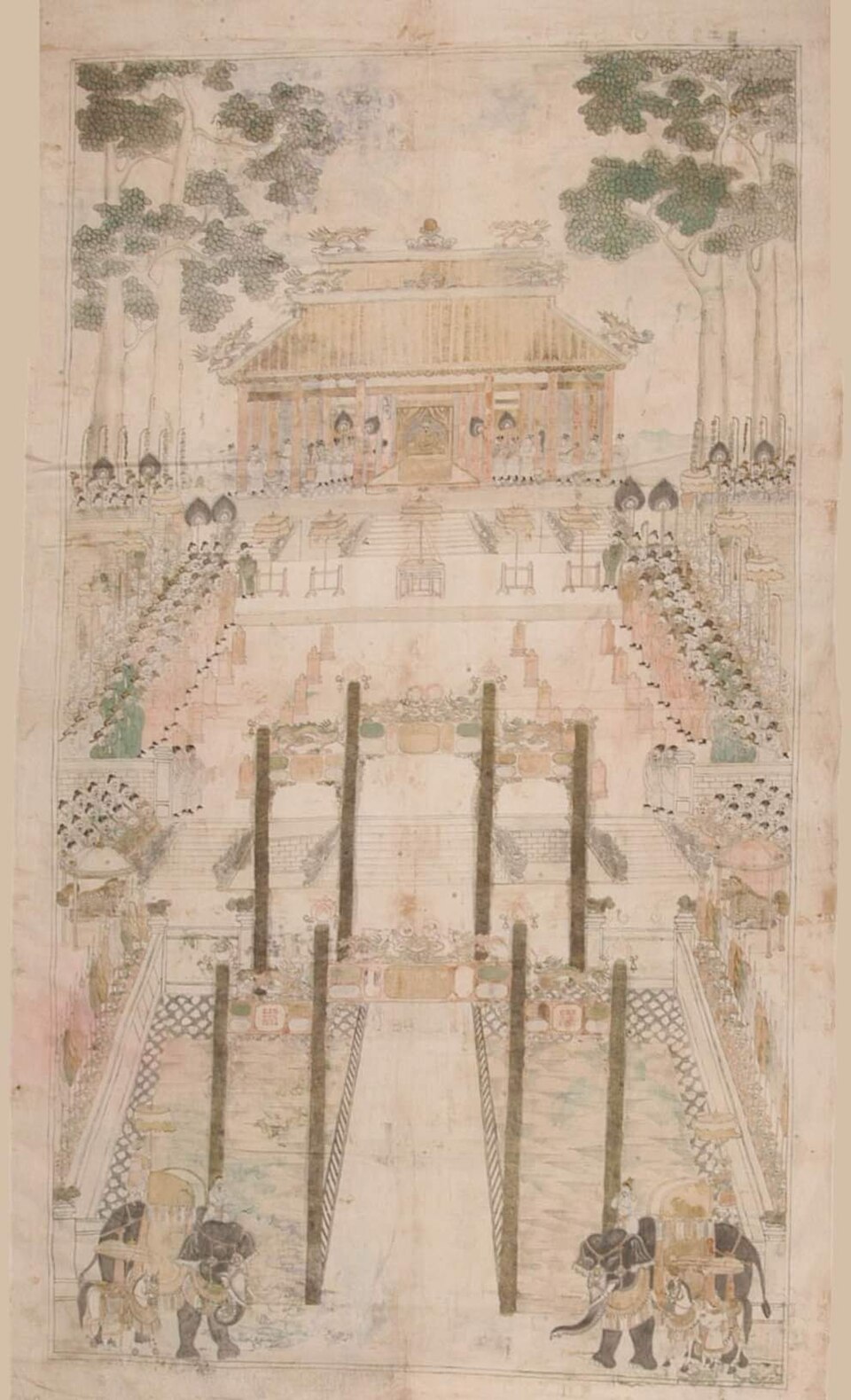
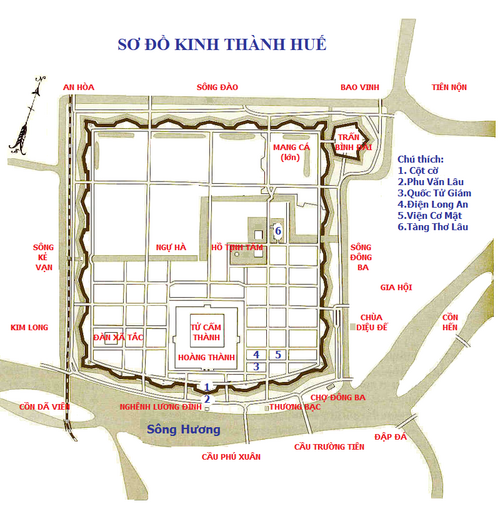
The Imperial City or Imperial Palace (Vietnamese: Hoàng thành; chữ Hán: 皇城) also known as Đại Nội (大內), is a royal enclosure within the walled city (Vietnamese: Kinh thành; chữ Hán: 京城) of Huế, the former imperial capital of Vietnam during the Nguyễn dynasty. It contains the palaces that housed the imperial family, as well as shrines, gardens, and offices for mandarins. Constructed in 1804 under Emperor Gia Long as a new capital and later re-modelled and enlarged to its current scale in 1833, it mostly served as a ceremonial function and imperial residence during the French colonial period. After the end of the monarchy in 1945, it suffered heavy damage and neglect during the Indochina Wars through the 1980s. The Imperial City was designated as a UNESCO World Heritage Site in 1993 as part of the Complex of Huế Monuments and is undergoing restoration.
Further reading
Hue Citadel Gate is one of the 3D puzzles in World Artifacts: turn a cloud of broken pieces until it lines up. For iPhone, iPad, Apple Vision Pro and Android.

