World Artifacts › Atlas › Vietnam
One Pillar Pagoda
The emperor built it in 1049 after dreaming that a goddess handed him a son while sitting on a lotus, so the pagoda is a lotus on a single stem. French troops blew it up as they left in 1954 and it was rebuilt the following year.
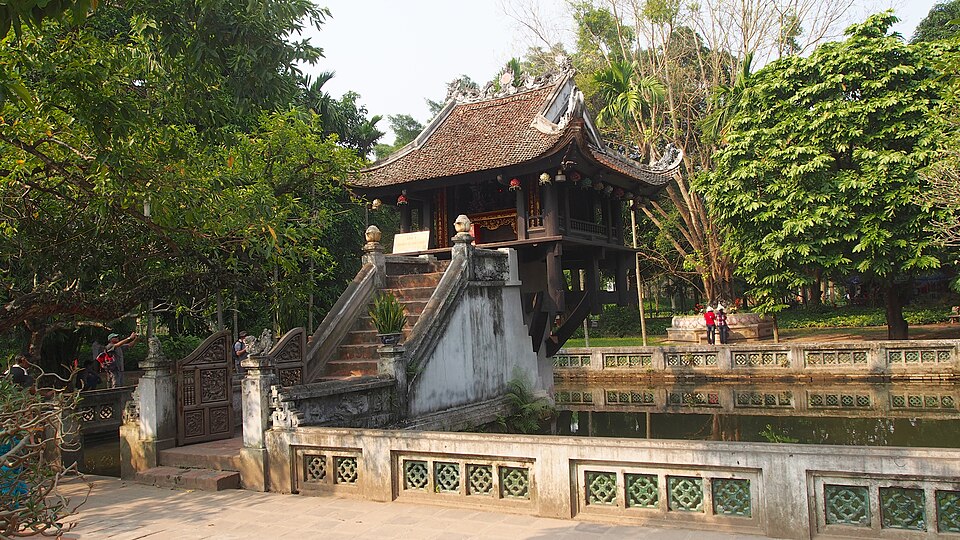
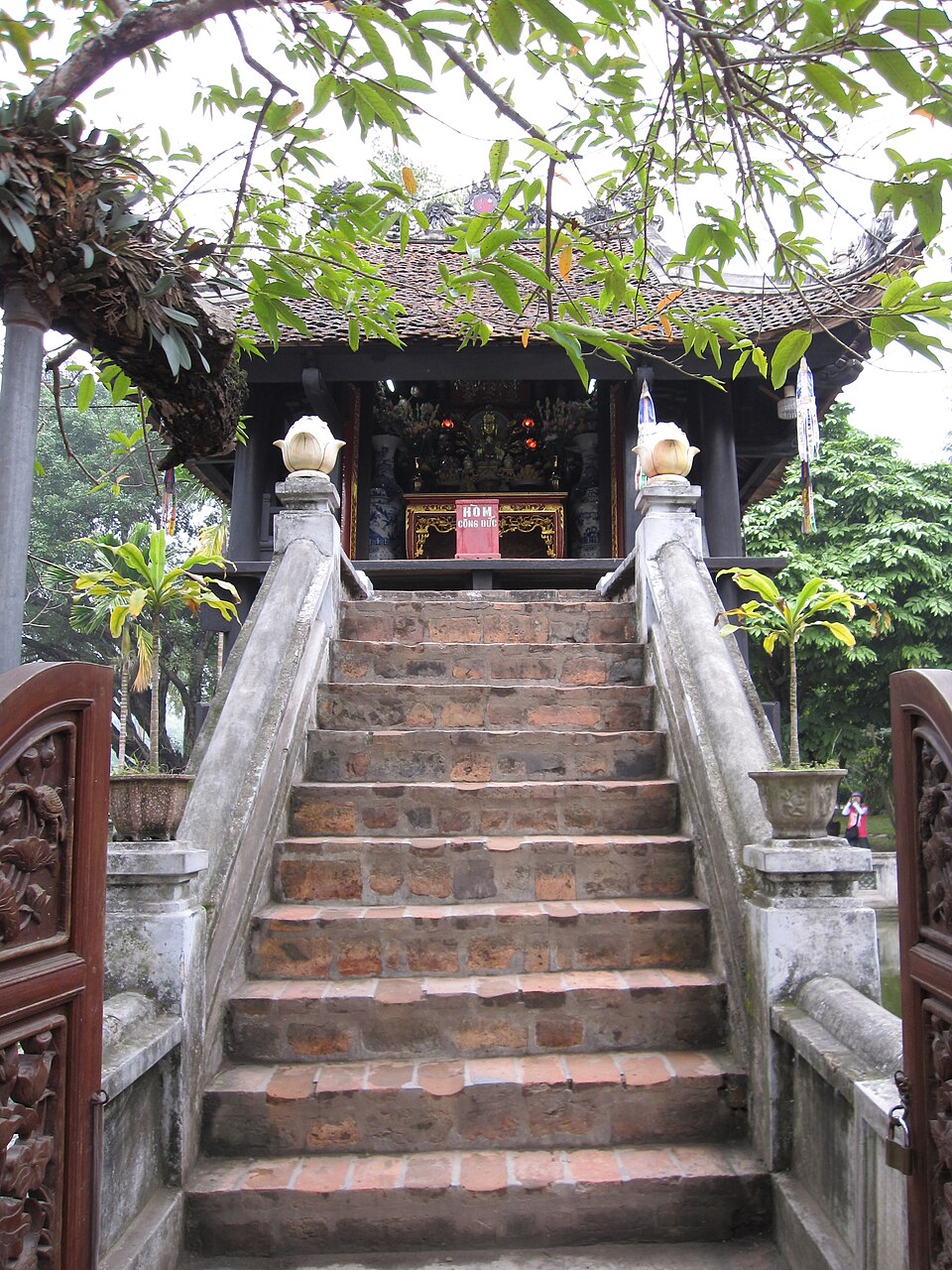
The One Pillar Pagoda (Vietnamese: Chùa Một Cột; chữ Nôm: 廚𠬠榾), formally belongs to an architecture complex called Diên Hựu tự (chữ Hán: 延祐寺) which means 'pagoda of extended blessings'. The pagoda is a historic Buddhist temple in the central Ba Đình district (near the Thăng Long Citadel), Hanoi, the capital of Vietnam. The most famous part of this architecture complex is Liên Hoa Đài (蓮花臺) means 'the lotus pedestal' which is a temple with special structure: a building laid on one pillar. The original pagoda was built in 1049, had some additions and was perfected in 1105. It is regarded alongside the Hương Temple, as one of Vietnam's two most iconic temples.
Further reading
One Pillar Pagoda is one of the 3D puzzles in World Artifacts: turn a cloud of broken pieces until it lines up. For iPhone, iPad, Apple Vision Pro and Android.

