World Artifacts › Atlas › Vietnam
Đông Sơn Drum
These bronze drums are over two thousand years old, cast by the lost wax method, with a star at the centre and rings of dancers, boats and birds. They are the emblem of a Vietnamese civilisation that existed before Chinese rule, which is why they are on the national bank's imagery.
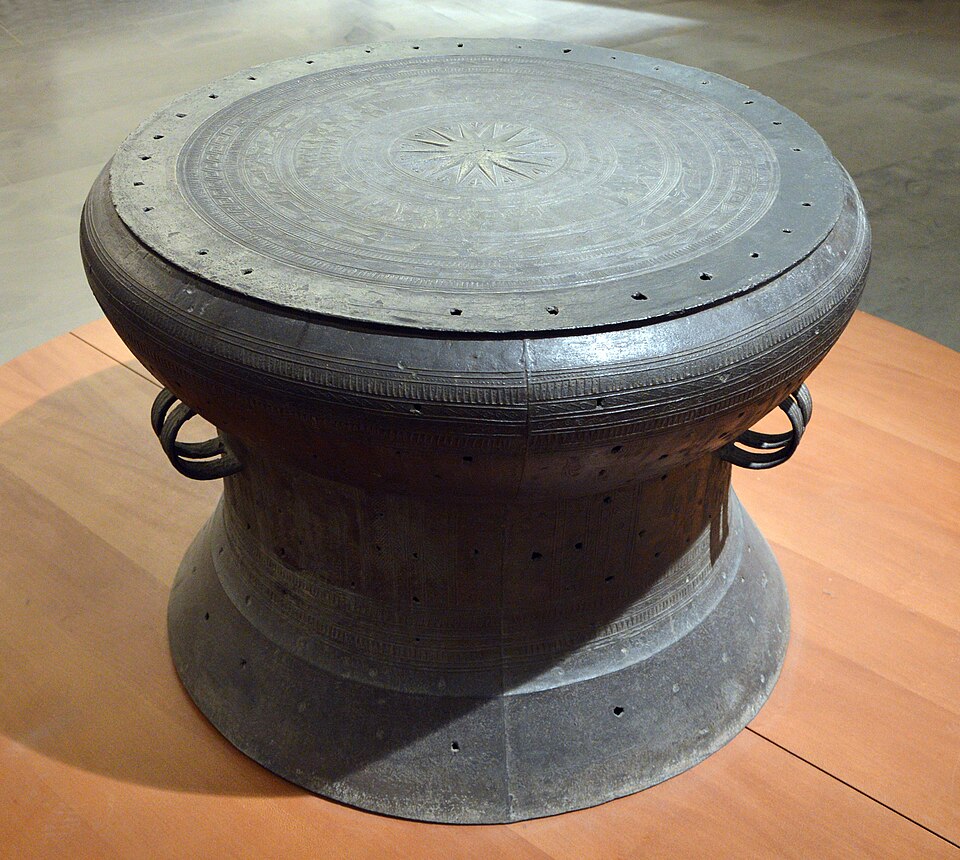
A Đông Sơn drum (Vietnamese: Trống đồng Đông Sơn, lit. 'Bronze drum of Đông Sơn'; also called Heger Type I drum) is a type of ancient bronze drum created by the Đông Sơn culture that existed in the Red River Delta. The drums were produced from about 600 BCE or earlier until the third century CE; they are one of the culture's most astounding examples of ancient metalworking. The drums, cast in bronze using the lost-wax casting method are up to a meter in height and weigh up to 100 kilograms (220 lb). Đông Sơn drums were apparently both musical instruments and objects of worship.
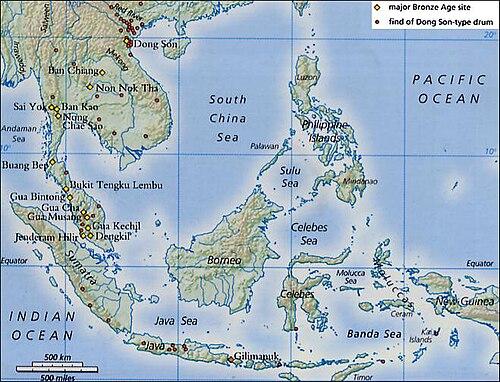
They are decorated with geometric patterns, scenes of daily life, agriculture, war, animals and birds, and boats. The latter alludes to the importance of trade to the culture in which they were made, and the drums themselves became objects of trade and heirlooms. One of the recurring pattern is the Lạc bird found in the second outer ring and also in the symbolism of Mo (religion). More than 200 have been found, across an area from eastern Indonesia to Vietnam and parts of Southern China.
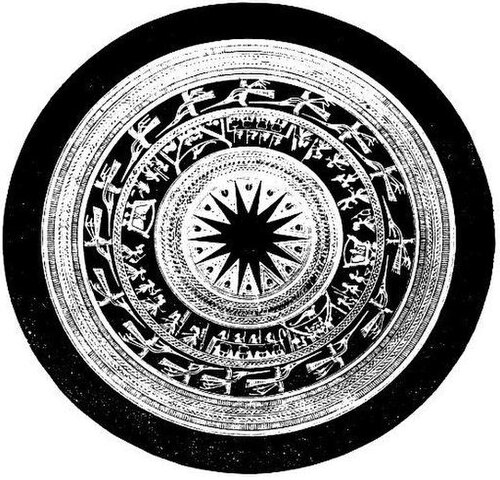
The display on the surface of the Đông Sơn drums are often depicted across many cultural institutes of Vietnam, one being displayed in Vietnam parliamentary office during some of Vietnam's ASEAN summits.
Further reading
Đông Sơn Drum is one of the 3D puzzles in World Artifacts: turn a cloud of broken pieces until it lines up. For iPhone, iPad, Apple Vision Pro and Android.

