World Artifacts › Atlas › Yemen
Awam Temple Pillars
The row of tall square pillars.
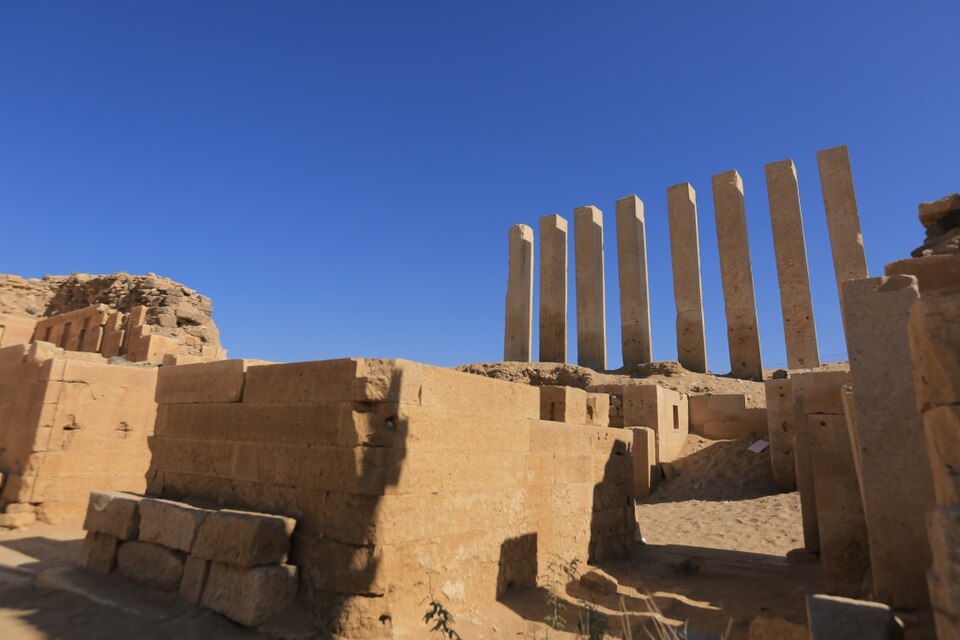
The Temple of Awwam (Arabic: معبد أوام, Sabaean: 𐩱𐩥𐩣), commonly known as Mahram Bilqis (Arabic: محرم بلقيس, romanized: Maḥram Bilqīs, lit. 'Sanctuary of Bilqīs') by locals, was the main Sabaean temple dedicated to their national god, Almaqah (frequently called "Lord of ʾAwwām"), and it is also the largest known temple complex in South Arabia, located near Marib in what is now Yemen. The temple is situated 7 kilometres (4.3 mi) southeast of ancient Marib, and was built on the outskirts of the city. Although usually major Sabaean sanctuaries are located outside urban centers, its placement was probably for reasons of religious privacy and to facilitate the conduct of rituals by arriving pilgrims from remote areas of Sabaean territories. Nearly a thousand inscriptions have been discovered from the Temple, comprising the single most important collection of pre-Islamic Arabian inscriptions that provides the foundation for reconstructing an outline of the political history of Yemen in its first three centuries of the Common Era.
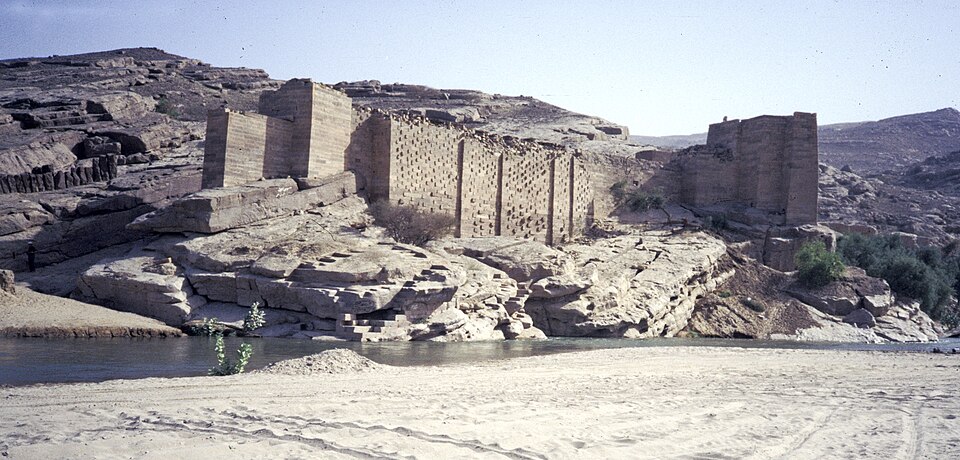
The temple was in operation from the beginning of the 1st millennium BC until the 4th century AD. Pilgrim rites began at the Harunum Temple, before moving to the Awwam Temple through a processional road connecting the two temples.
Further reading
- Queen of Sheba · St. John Simpson (2002)A book on the Queen of Sheba, with Yemenite art, antiquities and civilization.Find a copy: AbeBooks · Amazon · WorldCat
- Pre-Islamic Yemen · A. V. Korotaev (1996)A study of pre-Islamic Yemen, covering the Sabaeans, their politics and social conditions.Find a copy: AbeBooks · Amazon · WorldCat
Awam Temple Pillars is one of the 3D puzzles in World Artifacts: turn a cloud of broken pieces until it lines up. For iPhone, iPad, Apple Vision Pro and Android.

