World Artifacts › Atlas › South Africa
Cape Buffalo
Cape buffalo kill more hunters than any other animal in Africa and are known for circling back on whoever wounded them. A resting herd also appears to vote: the animals stand and stare in the direction they want to go, and the herd moves on the average.
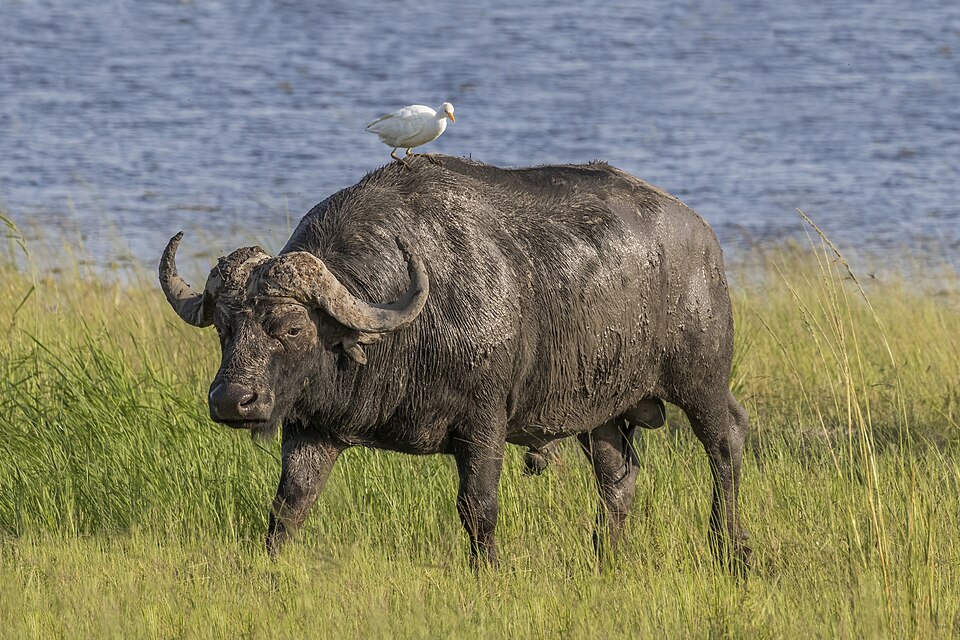
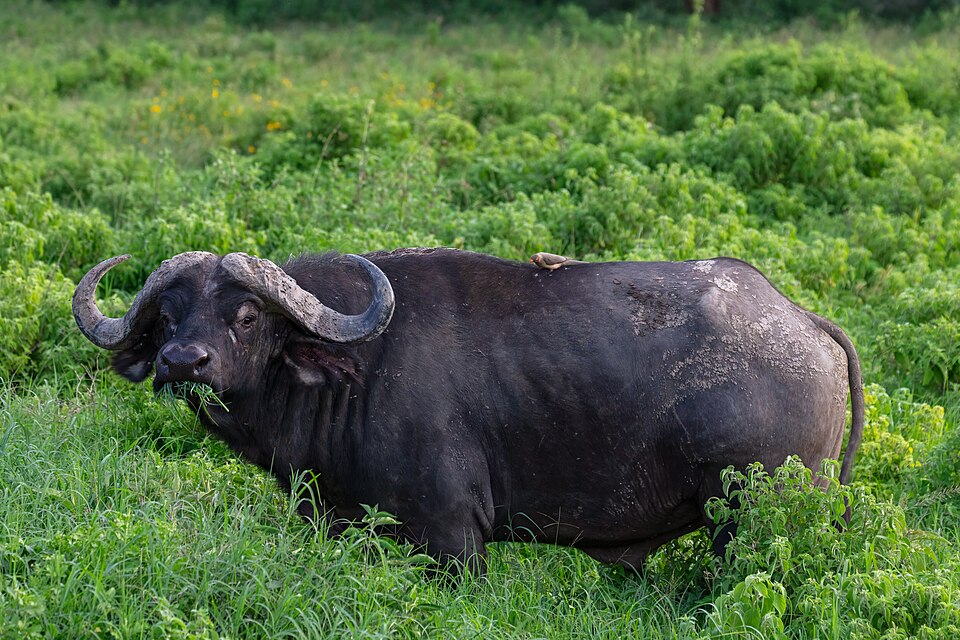
The African buffalo (Syncerus caffer) is a large bovine native to sub-Saharan Africa. First described in 1779 by Anders Sparrman, it is the only extant species of the genus Syncerus. Four subspecies are currently recognized: the Cape buffalo, West African savanna buffalo, Central African savanna buffalo, and African forest buffalo. It is a heavily built animal with a broad head and torso, a strong neck, large horns, and a bony armor or "boss" across the forehead of males. The fur ranges in color from rusty to black, and the tail ends with a dark, hairy tuft.
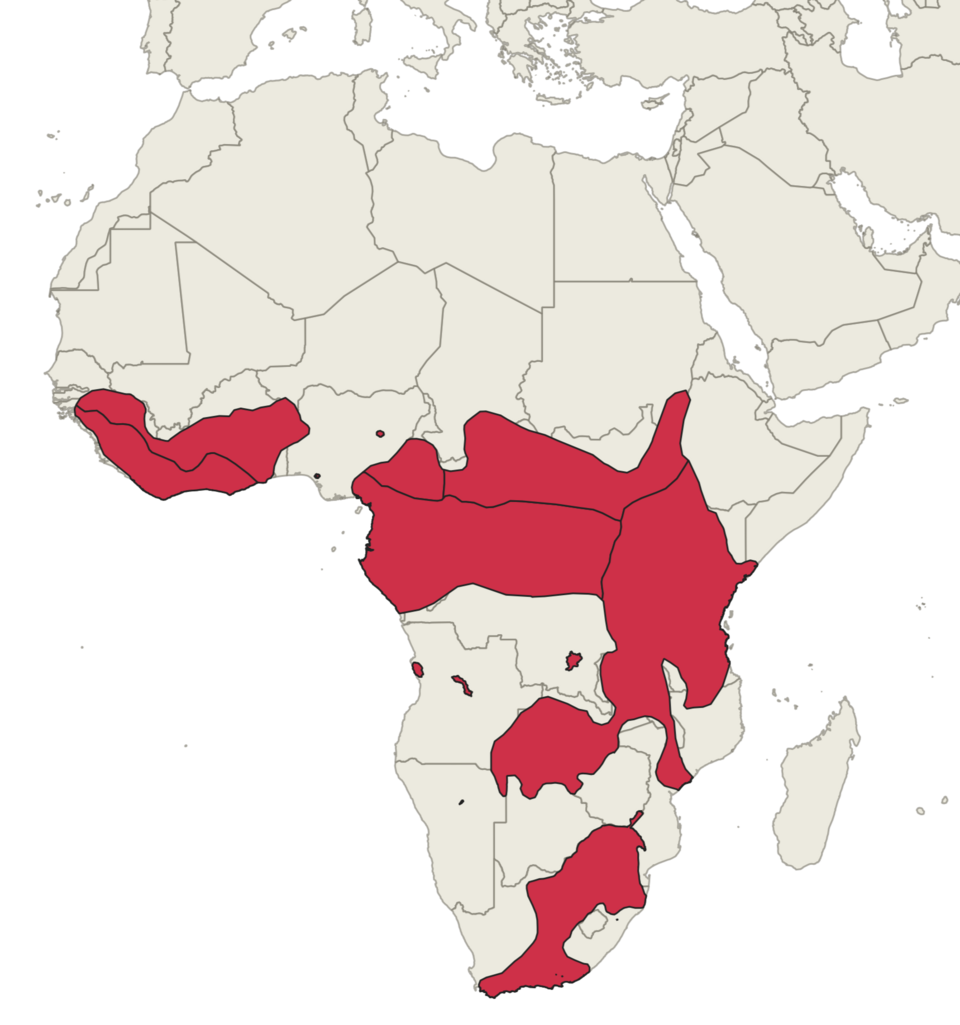
The African buffalo occurs in a variety of habitats, such as woodlands, savannas, forests, grasslands, shrublands, and wetlands. It is a ruminant and a grazer, primarily feeding on grass and dietary fiber. A social animal, the African buffalo forms herds ranging in size from a few individuals to over a thousand members. Herds typically consist of adult females and their young, and a number of adult males that temporarily join herds for mating opportunities. Males have a pecking order where dominant individuals hold the best access to mates. After a gestation of more than 10 months, females give birth to a single calf. Weaning occurs between 10 and 18 months, and the lifespan is about 12 years in the wild. Adult African buffaloes have few natural predators because of their size and aggression, though calves are much more vulnerable.
Further reading
Cape Buffalo is one of the 3D puzzles in World Artifacts: turn a cloud of broken pieces until it lines up. For iPhone, iPad, Apple Vision Pro and Android.

