World Artifacts › Atlas › Zambia
Nyau Mask
The Gule Wamkulu animal mask.
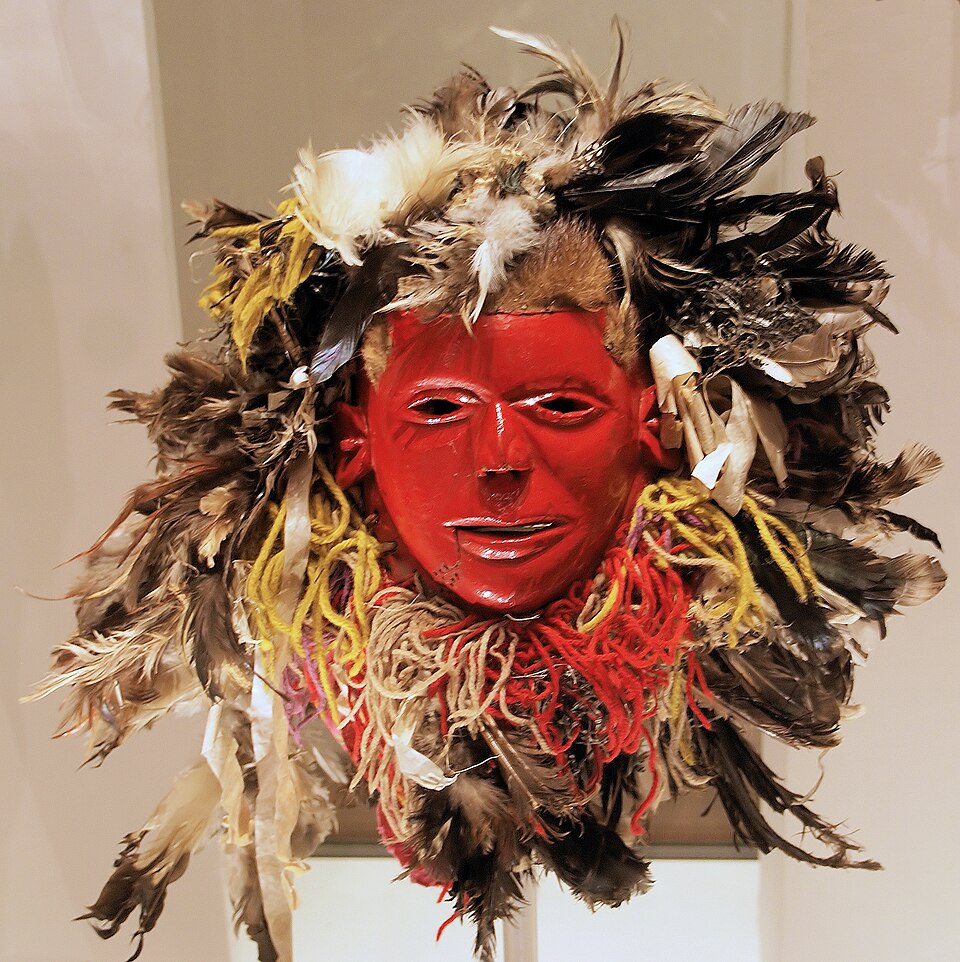
Nyau (also: Nyao meaning mask or initiation) is a secret society of the Chewa, an ethnic group of the Bantu peoples from Central and Southern Africa. The Nyau society consists of initiated members of the Chewa people, forming the cosmology or indigenous religion of the people. Initiations are separate for men and for women, with different knowledge learned and with different ritual roles in the society according to gender and seniority. Only initiates are considered to be mature and members of the Nyau.
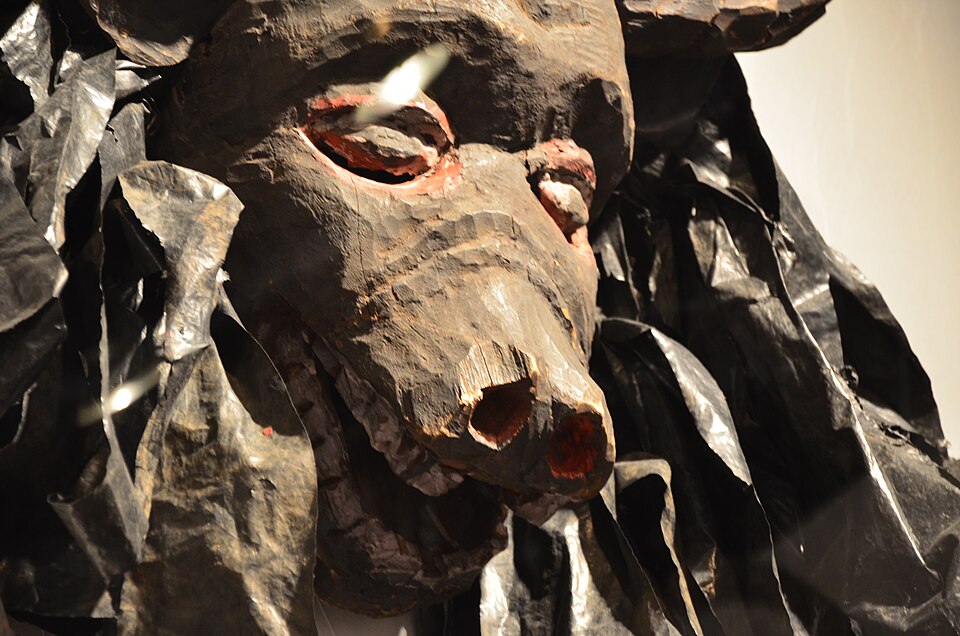
The word Nyau is not only used for the society itself, but also for the indigenous religious beliefs or cosmology of people who form this society, the ritual dance performances, and the masks used for the dances. Nyau societies operate at the village level, but are part of a wide network of Nyau across the central and part of the southern regions of Malawi, eastern Zambia, western Mozambique and areas where Malawians migrated in Zimbabwe.
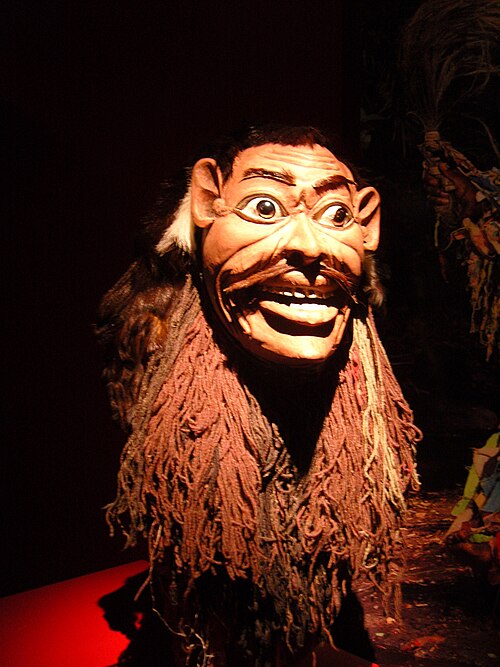
During performances with the masks women and children often rush into the houses when a Nyau performer threatens, as the masks are worn by only male members of the society and represent male knowledge. At that moment in the performance and rituals, Nyau masked dancers are understood to be spirits of the dead. As spirits the masquerades may act with impunity and there have been attacks and deaths during performances in the past. Increasing westernization has led to a decrease in Nyau.
Further reading
- Chewa traditional religion · J. W. M. van Breugel (2001)Covers Chewa traditional religion, including religious life, rites and ceremonies.Find a copy: AbeBooks · Amazon · WorldCat
- Playful performers · Simon Ottenberg (2005)Studies masquerades and masks as performance, with rites and ceremonies and children's folklore.Find a copy: AbeBooks · Amazon · WorldCat
Nyau Mask is one of the 3D puzzles in World Artifacts: turn a cloud of broken pieces until it lines up. For iPhone, iPad, Apple Vision Pro and Android.

